
Red Light Therapy Mask for Men: Does It Really Work? (2026 Guide)
A red light therapy mask for men is no longer just a wellness gadget promoted by influencers. LED face masks have become one of the fastest-growing categories in men’s skincare, promising clearer skin, fewer fine lines, calmer shaving irritation, and a more even complexion without adding complicated steps to a routine. But do these masks actually work, or is the hype stronger than the evidence?
What Is Red Light Therapy?
Red light therapy—also called photobiomodulation or low-level light therapy—uses specific wavelengths of visible red and near-infrared light to influence cellular activity in the skin. Unlike ultraviolet light from the sun or tanning beds, therapeutic red and near-infrared light does not rely on UV radiation and does not appear to cause the DNA damage associated with UV exposure.
Most at-home masks use red light in the range of approximately 630–660 nanometers and near-infrared light around 830–850 nanometers. Red light mainly works in the upper layers of the skin, while near-infrared light can penetrate more deeply.
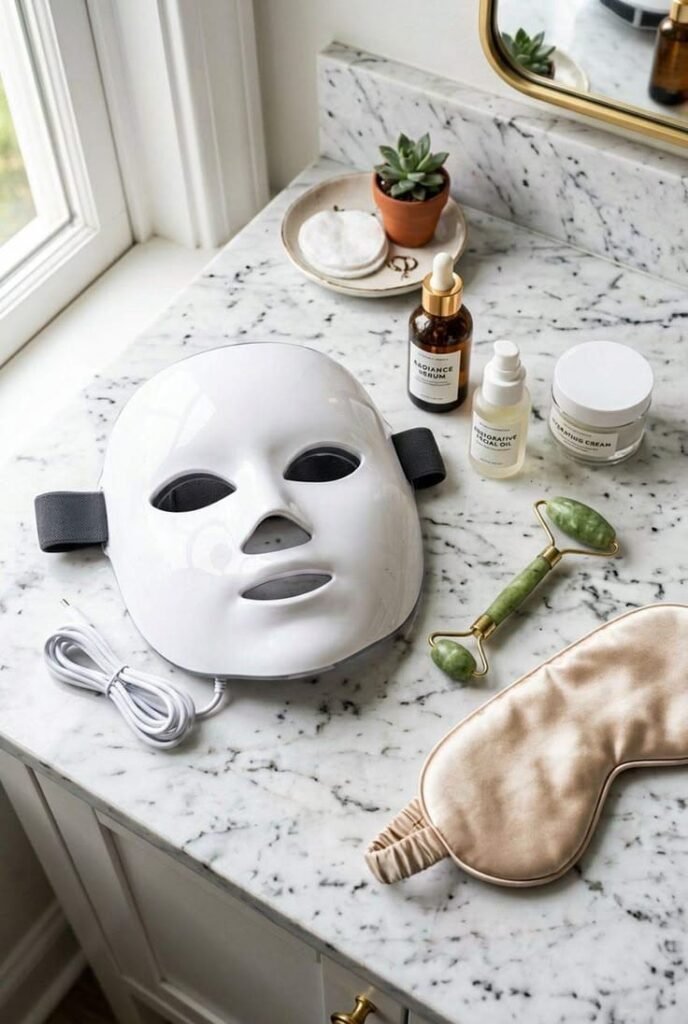
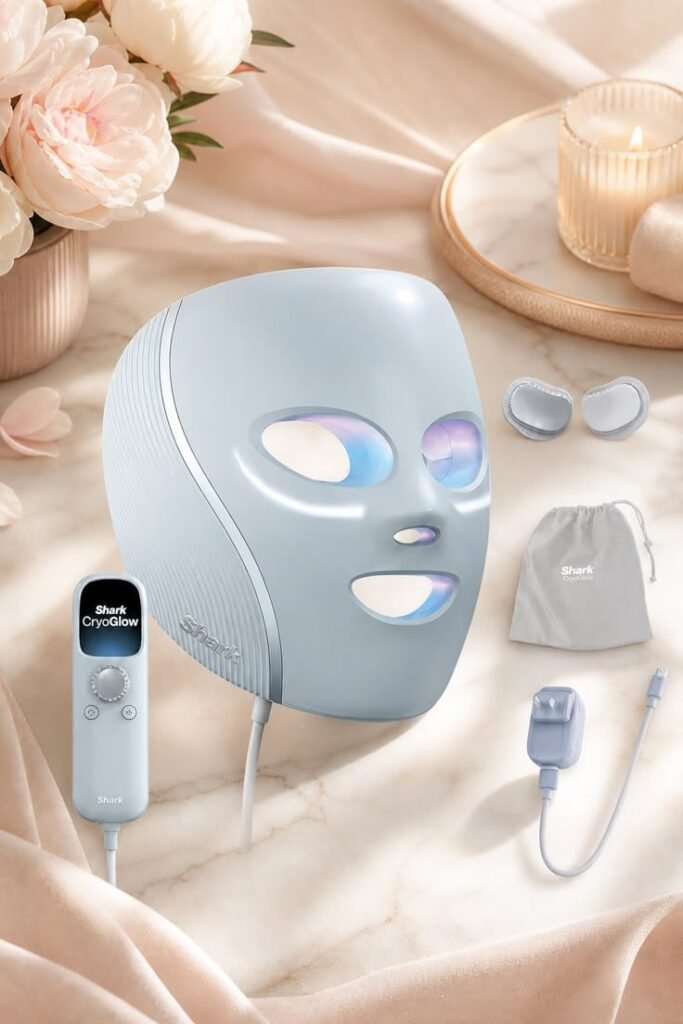
A red light therapy mask is simply a hands-free LED device shaped to cover the face. Many masks combine red and near-infrared LEDs; some also include blue light, which is generally used for acne-related concerns rather than anti-aging.
For men, the appeal is practical: you wear the mask for several minutes, then continue with your normal skincare routine. That makes it a potentially useful add-on for someone who wants results without spending 20 minutes applying multiple products.
How Red Light Masks Work
Red and near-infrared light are absorbed by structures inside skin cells, particularly components of the mitochondria. The theory behind photobiomodulation is that this absorption may support cellular energy processes, influence inflammatory signaling, and encourage processes involved in collagen production and tissue repair.
In practical terms, this does not mean a mask “rebuilds” your skin overnight. The changes associated with red light therapy are usually subtle and cumulative. Clinical research on home-use devices generally finds improvements in skin texture, firmness, fine lines, and signs of photoaging after weeks or months of regular treatment—not after one or two sessions.
A clinical study of home-use LED and infrared phototherapy using 630 nm red light and 850 nm near-infrared light found the treatment to be effective, safe, well tolerated, and painless for skin rejuvenation. However, as with most skincare technologies, results depend heavily on device quality, wavelength, dose, treatment frequency, and individual skin response.pmc.ncbi.nlm.nih.
This is why Gent Armor approaches LED masks as a supportive skincare tool, not a miracle device. A red light mask may complement a routine, but it cannot compensate for daily sun exposure, harsh over-exfoliation, poor barrier care, or inconsistent use of proven skincare. aad.
Why Men Are Using Red Light Masks
Men’s skincare has moved beyond shaving and basic grooming. More men now want practical solutions for acne marks, dullness, early aging, post-shave irritation, and skin that looks healthier without a 10-step routine.
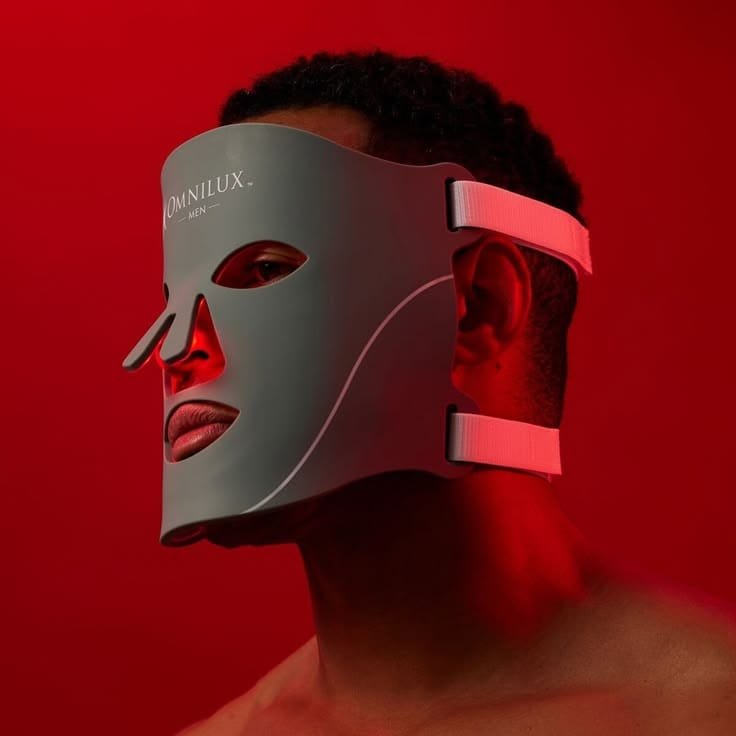
A red light mask for men fits that demand because it is simple, hands-free, and non-invasive. It can be used after cleansing and before moisturizer, making it easy to integrate into an AM or PM routine.
Men may also be drawn to red light therapy because it does not require the same level of product layering as some anti-aging routines. Instead of adding several serums, a user can cleanse, use the mask, then apply moisturizer and sunscreen. For a straightforward routine, pair it with a gentle cleanser such as CeraVe Foaming Facial Cleanser and a basic moisturizer such as CeraVe Daily Moisturizing Lotion.
Does a Red Light Therapy Mask Work?
Yes—but with important limits.
The best-supported use of red light therapy is for skin rejuvenation: improving the appearance of fine lines, skin texture, firmness, and some signs of photoaging over time. Studies of red and near-infrared light suggest possible benefits for collagen-related processes, wound healing, and inflammatory skin conditions, though at-home mask research is still more limited than professional clinic research.
One of the stronger home-use trials compared a mask delivering 630 nm red light and 850 nm near-infrared light with a sham device. Participants used the mask for nine minutes, five days per week, for 12 weeks. The active group showed better improvement in crow’s feet than the sham group, illustrating that benefits are possible—but only with repeated use over a meaningful period.
That does not mean every mask will produce the same result. Wavelength, LED density, irradiance, treatment time, distance from the skin, and whether the device actually delivers near-infrared light all matter. A mask that only lists “LED light” without clear wavelength or power information may not deliver the same exposure studied in clinical trials.
What Red Light Therapy May Help
Fine lines and early aging
Red light therapy is most commonly associated with cosmetic anti-aging. Research suggests that red and near-infrared light may support collagen-related processes, improve skin firmness, and reduce the appearance of fine lines over time.
For men, this may be useful for early crow’s feet, forehead lines, and loss of firmness—but it will not erase deep wrinkles or replace procedures such as prescription retinoids, professional treatments, or dermatologist-guided care. A realistic goal is smoother-looking, firmer-looking skin over several weeks or months, not overnight transformation.
If aging is a major concern, a red light mask can be combined with a well-tolerated retinoid routine. Learn how retinoids influence skin renewal in Gent Armor’s guide to retinoids and cell turnover, then introduce actives slowly to avoid irritation.
Acne marks and uneven texture
A red light therapy mask may help calm inflammation and support the skin’s recovery processes, which can be useful for post-acne redness and uneven texture. However, red light is not the same as blue light: blue light is more often associated with targeting acne-causing bacteria, while red and near-infrared light are more commonly used for calming and recovery-focused benefits.
If you have active inflammatory acne, do not expect an LED mask alone to clear it. Acne usually needs a broader approach: gentle cleansing, non-comedogenic moisturizer, sun protection, and—when appropriate—evidence-based actives such as benzoyl peroxide, azelaic acid, retinoids, or dermatologist-prescribed treatment.
For post-acne marks, pairing consistent sun protection with ingredients that support tone and texture can be more useful than relying on light therapy alone. Gent Armor’s comparison of niacinamide vs retinol for men is a useful starting point for choosing an evidence-based active.
Dullness and uneven tone
Some users notice brighter-looking or more even-looking skin after regular red light use. This may be related to improved circulation, reduced inflammation, and gradual improvements in skin texture—but these effects are usually modest and vary from person to person.
For dark spots and hyperpigmentation, sunscreen remains non-negotiable. A red light mask may support the skin’s appearance, but UV exposure can worsen pigmentation and undermine your results. Choose a broad-spectrum sunscreen and reapply it during the day when needed.aad+1
For a practical sunscreen option, see Gent Armor’s guide to the best sunscreen for men or its review of CeraVe Sunscreen SPF 30. If white cast is a concern, the guide to no-white-cast sunscreen for men may help.
Red Light vs Blue Light
| Light type | Typical wavelength | Main use | Best for |
|---|---|---|---|
| Red light | About 630–660 nm | Skin rejuvenation and calming | Fine lines, texture, post-acne redness, recovery |
| Near-infrared light | About 830–850 nm | Deeper penetration | Firmness, recovery, photoaging support |
| Blue light | Around 400–470 nm | Acne-focused treatment | Active acne, oiliness, acne-causing bacteria |
Red light is generally the better choice if your goal is anti-aging, texture, and calming shaving irritation. Blue light may be more relevant if active acne is the primary issue, but it is not necessarily the best option for someone whose main concern is wrinkles or dryness
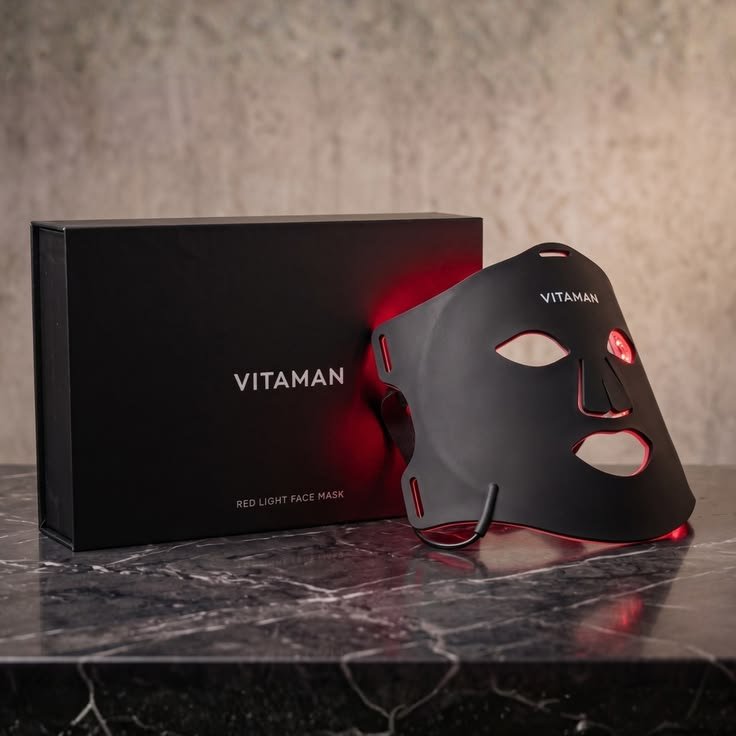
Many masks combine red and near-infrared light because they address different depths of the skin. If your priority is anti-aging or recovery, look for a device that clearly states both its red and near-infrared wavelengths.pmc.ncbi.nlm.nih+2
How to Use a Red Light Therapy Mask
Using a red light therapy mask for men is straightforward, but consistency matters more than intensity. Most home-use studies involve repeated sessions over 8–12 weeks, rather than occasional long sessions.
Step 1: Start with clean, dry skin
Cleanse your face to remove sunscreen, sweat, oil, and dirt. A gentle cleanser is usually enough; avoid harsh scrubbing before LED therapy, especially if your skin is already irritated.
For oily or combination skin, CeraVe Foaming Facial Cleanser can be a practical option. For dry or normal skin, avoid over-cleansing and choose something that does not leave your face feeling tight.
Step 2: Use the mask as directed
Follow the manufacturer’s instructions for session length and frequency. Many home-use protocols fall around 9–10 minutes per session, several times weekly, but the correct schedule depends on the device’s power and design.
Do not assume that using the mask longer or more often will deliver better results. Overuse can increase the chance of irritation, and it may not improve outcomes.
Step 3: Moisturize afterward
After the session, apply a moisturizer to support the skin barrier. If your skin is dry, sensitive, or newly exposed to actives, choose a simple fragrance-free moisturizer rather than a heavily fragranced product.
For a basic option, see Gent Armor’s review of CeraVe Daily Moisturizing Lotion. If you want to compare moisturizers before choosing one, Review Dermatica’s guide to CeraVe vs Cetaphil moisturizer may be useful.
Step 4: Use sunscreen in the morning
If you use the mask in the morning, finish with broad-spectrum sunscreen. Red light therapy is not a substitute for UV protection, and sunscreen is still the most important anti-aging step in any men’s skincare routine.
For daily use, consider EltaMD UV Clear Broad-Spectrum SPF 46 or another broad-spectrum formula suited to your skin type. If you are unsure whether SPF 30 or SPF 50 is better for your routine, Review Dermatica explains the difference in its guide to sunscreen SPF 30 vs SPF 50.
Can It Help With Wrinkles?
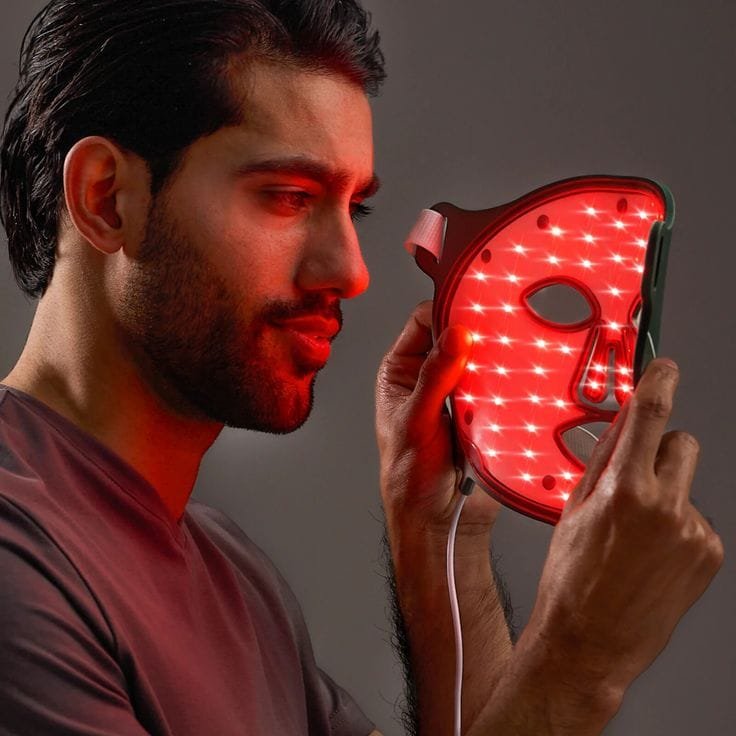
Red light therapy may help improve the appearance of fine lines and skin texture, but it will not produce the same result as a professional procedure or a well-established prescription retinoid. The evidence supports gradual, modest improvement with regular use—not dramatic reversal of aging.
A 12-week home-use study using red and near-infrared light found statistically significant but modest improvements in wrinkles and texture when the device was used consistently. That makes red light therapy a reasonable adjunct, especially for men who want a low-effort addition to their routine.
If wrinkles are your main concern, combine the mask with daily sunscreen, a moisturizer that supports the barrier, and—if your skin tolerates it—a retinoid introduced gradually. Avoid starting a retinoid and a new LED device at the same time if your skin is sensitive; introduce one change at a time so you can identify what is causing irritation. aad.
Can It Help With Acne?
Red light therapy may help with inflammation and recovery, but it is not the strongest standalone treatment for active acne. Blue light is more often discussed for acne-causing bacteria, while red and near-infrared light are more often used for calming and supporting the skin’s appearance after breakouts.
If you have mild breakouts, a red light mask may be a supportive tool—but it should not replace a consistent routine. Use a gentle cleanser, avoid picking at spots, moisturize appropriately, and protect your skin from UV exposure.
For men dealing with post-acne marks, ingredients such as azelaic acid may be worth exploring. Review Dermatica’s breakdown of Anua Azelaic Acid Serum ingredients explains how azelaic acid fits into a tone- and texture-focused routine.
What to Look for Before Buying
Not all LED face masks for men are equal. Before buying, check the specifications rather than relying only on marketing claims.
Wavelength
Look for clear information on wavelength. For red light, the commonly studied range is approximately 630–660 nm. For near-infrared light, 830–850 nm is a useful benchmark.
A mask that does not disclose its wavelengths may still be usable, but it is harder to judge whether it matches the exposure used in research.
Red and near-infrared light
If anti-aging, firmness, and recovery are your goals, a mask that includes both red and near-infrared light may be more aligned with the research than a red-only device.
Near-infrared light penetrates more deeply than visible red light, which is one reason it is often included in devices marketed for photoaging and recovery.pmc.ncbi.nlm.nih.
Treatment area and fit
A mask should cover the areas you actually want to treat. If your main concern is the forehead, eyes, or full face, make sure the device’s LED placement matches those areas.
For men with facial hair, fit can matter. A mask that sits too far from the skin may deliver less consistent exposure, although the exact impact depends on the device design.
Safety features
Look for clear instructions, a treatment timer, eye-protection guidance, and realistic claims. Avoid devices that promise overnight results, claim to cure disease, or make exaggerated anti-aging promises.
For a men’s device example, see Gent Armor’s review of the TheraBody TheraFace Mask. It can help you understand what features and trade-offs to consider before choosing an LED mask.
How Long Until You See Results?
Most people should not expect visible changes after one session. In home-use research, meaningful assessments often occur after 8–12 weeks of consistent treatment.
A reasonable approach is to use the device as directed for at least two to three months before deciding whether it works for your skin. Take photos in consistent lighting before starting, then compare them every few weeks rather than judging results from day-to-day mirror checks.
If you experience burning, significant redness, swelling, blistering, or worsening pigmentation, stop using the device and seek advice from a dermatologist.
A Simple Men’s Routine With a Red Light Mask
If you want to keep things simple, use this structure:
Morning
- Cleanse gently or rinse with water, depending on your skin type.
- Apply moisturizer if your skin feels dry.
- Use your red light mask only if it fits your schedule and the device is designed for morning use.
- Apply broad-spectrum sunscreen as the final step.
Evening
- Cleanse to remove sunscreen, oil, and dirt.
- Use the red light mask as directed.
- Apply moisturizer.
- If prescribed or tolerated, use a retinoid on separate nights from strong exfoliants.
Do not feel pressured to use a mask every night. A sustainable routine you can follow consistently is more valuable than an aggressive routine you abandon after two weeks.
FAQs: Red Light Therapy Mask for Men
Do red light therapy masks really work?
They can provide modest benefits, especially for fine lines, texture, and some signs of photoaging, when used consistently with a suitable device. They are not miracle devices, and results vary.
Is a red light mask good for men?
Yes. Men can use red light masks for anti-aging support, post-acne redness, dullness, and shaving-related irritation, provided the device is used safely and consistently.
Can a red light mask remove acne scars?
It may improve the appearance of post-acne redness and texture over time, but it cannot remove true scarring. Deep scars often require dermatologist-guided treatment.
Can I use a red light mask every day?
Follow the instructions for your specific device. More frequent use is not automatically better and can increase irritation risk.
Should I use red light before or after shaving?
If your skin is comfortable, some men use it after shaving as part of a calming routine. Avoid using it over broken, severely irritated, or open skin. aad.
Final Verdict
A red light therapy mask for men can be a worthwhile add-on for men who want a simple, non-invasive way to support smoother-looking, calmer-looking skin over time. The strongest case is for gradual improvements in fine lines, texture, and some signs of photoaging—not overnight acne clearance or dramatic wrinkle removal.pmc.ncbi.nlm.nih+1
For best results, treat it as one part of a larger routine: gentle cleansing, moisturizer, daily sunscreen, and—when appropriate—evidence-based actives. A red light mask may support your routine, but it cannot replace the basics.
If you want a low-effort grooming upgrade, a quality red light therapy mask for men can be worth considering. Just choose a device with transparent specifications, use it consistently, protect your eyes, and keep your expectations realistic.