
Clinical Skincare Comparisons: 7 Powerful Head-to-Head Audits
Introduction: The Fallacy of Modern Skincare Marketing
Walk down any personal care aisle or scroll through your social media feed, and you will be bombarded by bold promises: “Erases wrinkles overnight,” “72-hour deep barrier hydration,” or “Clinical-strength formula.” The modern male grooming market is overflowing with sophisticated claims, luxurious packaging, and high-dollar price tags. Yet, when you strip away the branding, a frustrating question remains: Which product actually works at a biological level?
Welcome to Clinical Versus, the central analytical hub of GentArmor.
The primary challenge in modern dermatology and grooming isn’t a lack of choices; it is an overabundance of biased information. Skincare brands routinely publish isolated clinical trials designed to validate their own products. These trials frequently rely on undisclosed active concentrations, inconsistent testing timelines, and non-standardized vehicles. When every brand claims to have the superior formula, consumer decision-making devolves into mere guesswork.
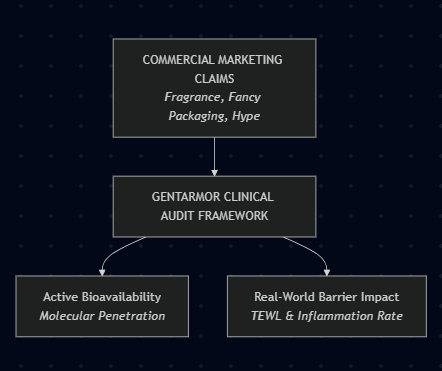
Clinical Versus was built to replace marketing noise with objective evidence. We conduct head-to-head audits, molecular breakdowns, and real-world trials to evaluate topicals using standardized metrics. Whether you are weighing prescription-strength retinoids against botanical alternatives or questioning whether a $180 medical-grade serum outperforms a $20 drugstore formula, our clinical skincare comparisons deliver clear, data-driven answers tailored to men’s skin physiology.
Why Men’s Skin Requires Dedicated Comparative Research
A critical flaw in generic skincare reviews is the assumption that skin is biologically identical across all demographics. Men’s skin possesses distinct anatomical and physiological characteristics that drastically alter how active ingredients behave.
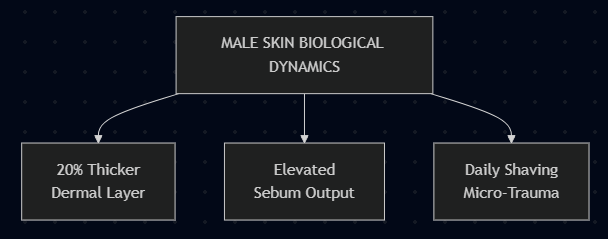
1. Increased Epidermal and Dermal Thickness
Driven by higher androgen levels (primarily testosterone), male skin is roughly 20% thicker than female skin. It contains a denser network of collagen and elastin fibers and a structurally tougher stratum corneum. Consequently, low-concentration active ingredients or poor vehicle formulations often fail to penetrate deep enough to trigger cellular responses. In our men’s skincare review science methodologies, we evaluate active bioavailability and penetration enhancers to ensure molecules actually reach their target depth.
2. Higher Sebum Output and Larger Pore Structure
Testosterone stimulates the sebaceous glands, causing male skin to produce significantly more oil throughout adult life. This elevated sebum profile creates a wider pore structure and increases susceptibility to follicular congestion, blackheads, and inflammatory acne. Thick, occlusive creams that perform beautifully on dry skin types can easily trigger breakouts on a male face. Our audits heavily penalize formulas containing heavy pore-clogging lipids or comedogenic emulsifiers.
3. Shaving-Induced Barrier Degradation
Daily or weekly shaving subjects the facial epidermis to regular physical trauma. Passing a razor blade over the skin strips away essential surface lipids, leading to micro-abrasions, ingrown hairs (pseudofolliculitis barbae), and elevated Transepidermal Water Loss (TEWL). When evaluating active topicals—such as chemical exfoliants or retinoids—we must factor in post-shave barrier sensitivity. An active that works on undamaged skin might cause severe contact dermatitis on a freshly shaved jawline.
For authoritative scientific literature regarding these biological differences, refer to the National Center for Biotechnology Information (NCBI) database on Male Skin Physiology.
The GentArmor 5-Pillar Evaluation Framework
To keep our clinical skincare comparisons entirely objective, every product, active compound, and brand audit is subjected to our standardized 5-Pillar Testing Protocol.
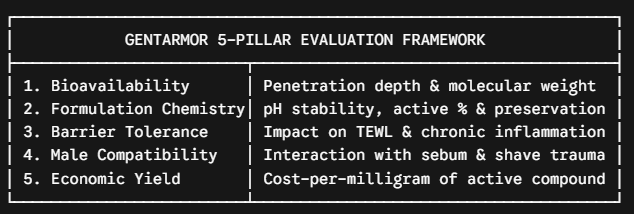
Pillar 1: Bioavailability and Molecular Size
An active ingredient can only function if it crosses the stratum corneum. Dermatology recognizes the 500 Dalton Rule, which states that compounds larger than 500 Daltons struggle to penetrate intact skin without specialized delivery vehicles. In our audits, we calculate the molecular weight of key ingredients and inspect whether the product uses advanced transport systems like liposomal encapsulation or nano-emulsions.
Pillar 2: Formulation Chemistry and pH Precision
Active compounds do not exist in isolation; they are heavily influenced by their surrounding formula. For instance, L-Ascorbic Acid (pure Vitamin C) requires an acidic pH below 3.5 to remain stable and cross the lipid barrier. If formulated at a neutral pH of 6.0, its efficacy drops dramatically. We measure pH levels and analyze preservation systems to verify formula stability over time.
Pillar 3: Skin Barrier Safety & TEWL Indicators
Aggressive results should never come at the expense of long-term barrier health. Compromising the stratum corneum leads to chronic inflammation, accelerated aging, and hyperpigmentation. We track real-world barrier indicators over a minimum 4-week testing cycle, prioritizing formulas that maintain optimal lipid levels.
Pillar 4: Compatibility with Male Skin Dynamics
We test how vehicles feel and perform on real male skin. Does the serum absorb cleanly without leaving a greasy sheen on a bearded or oily face? Does it sting when applied post-shave? Products earn higher ratings when they adapt seamlessly to male grooming routines.
Pillar 5: Cost-Per-Active Yield (True Value)
High prices do not guarantee superior results. We calculate the cost per milligram of the actual active ingredient, exposing overpriced products that hide tiny active concentrations behind expensive packaging.
7 Powerful Head-to-Head Clinical Audits
Below are seven comprehensive comparative audits evaluating key ingredient pairings, product formats, and brand categories in modern male skincare.

Audit 1: Retinol vs. Bakuchiol for Cellular Turnover
Cellular turnover is the foundation of anti-aging dermatology. Retinoids stimulate collagen production, accelerate cell shedding, and improve skin texture. However, the botanical alternative Bakuchiol has surged in popularity as a gentle substitute.
Key Features & Comparison
-
RETINOL (Vitamin A):
-
Decades of clinical proof and extensive dermatological research.
-
Rapid cell turnover and fast collagen stimulation.
-
Risk of skin irritation, dryness, and barrier disruption.
-
Requires PM (nighttime) usage due to photo-sensitivity.
-
-
BAKUCHIOL (Botanical Alternative):
-
Zero photo-sensitivity (safe for day and night use).
-
Highly barrier-safe with near-zero skin irritation.
-
Slower, gradual cell turnover rate compared to Vitamin A.
-
AM/PM safe for sensitive skin types.
-
The Biochemistry: Retinol converts into Retinoic Acid within the skin, binding directly to retinoic acid receptors (RARs) to upregulate collagen expression. Bakuchiol, derived from the Psoralea corylifolia plant, targets similar cellular pathways without binding to RARs in the exact same manner.
Irritation Profile: Retinol frequently causes initial flaking, redness, and barrier disruption (the “retinization” phase), particularly on shaved skin. Bakuchiol shows near-zero skin irritation and does not increase photosensitivity.
The Verdict: Retinol remains the gold standard for sheer speed and depth of dermal remodeling. However, for men with sensitive skin, rosacea, or those unwilling to navigate a purging phase, a 1% Bakuchiol formula provides a highly effective, barrier-safe alternative.
Explore our deep-dive analysis in the Ingredient Face-Offs section.
Audit 2: Salicylic Acid (BHA) vs. Glycolic Acid (AHA) for Male Pores
Excess sebum production makes chemical exfoliation essential for men. The two most common hydroxy acids are Salicylic Acid (BHA) and Glycolic Acid (AHA).
Key Features & Comparison
-
SALICYLIC ACID (BHA):
-
Lipophilic (Oil-Soluble) formulation.
-
Dissolves pore sebum and clears follicular congestion.
-
Possesses natural anti-inflammatory properties.
-
Effectively prevents razor bumps and ingrown hairs.
-
-
GLYCOLIC ACID (AHA):
-
Hydrophilic (Water-Soluble) formulation.
-
Unbinds and sheds surface dead skin cells.
-
Enhances surface hydration levels.
-
Higher risk of post-shave stinging and burn on micro-damaged skin.
-
Solubility Dynamics: Salicylic Acid is lipophilic (oil-soluble), allowing it to pass through surface sebum and penetrate deep into clogged pores to dissolve dead skin cells and oxidized lipids. Glycolic Acid is hydrophilic (water-soluble); it works on the skin surface by breaking the bonds between superficial dead skin cells.
Post-Shave Impact: Glycolic Acid’s small molecular size causes a sharp stinging sensation when applied to micro-damaged post-shave skin. Salicylic Acid possesses natural anti-inflammatory properties, making it far better tolerated on shave-prone areas.
The Verdict: Salicylic Acid (2%) is the clear winner for the vast majority of men due to its ability to clear deep pore congestion, regulate excess oil, and reduce ingrown beard hairs. Glycolic Acid should be reserved for non-shaved areas on men with dry, sun-damaged skin.
Audit 3: Copper Tripeptide-1 (GHK-Cu) vs. L-Ascorbic Acid (Vitamin C)
Antioxidant protection and tissue repair are critical for maintaining healthy skin. This audit compares traditional L-Ascorbic Acid against advanced Copper Tripeptide-1 (GHK-Cu).
Key Features & Comparison
-
L-ASCORBIC ACID (Vitamin C):
-
Direct free radical scavenger for morning antioxidant defense.
-
Inhibits tyrosinase to brighten post-inflammatory hyperpigmentation.
-
Highly acidic formulation requirement (pH < 3.5).
-
Prone to rapid light and air oxidation.
-
-
COPPER PEPTIDES (GHK-Cu):
-
Accelerates tissue remodeling, healing, and barrier repair.
-
Directly stimulates collagen and elastin matrix synthesis.
-
Compatible with neutral pH skin environments (no acidic sting).
-
Exceptional post-shave recovery and redness reduction.
-
Mechanism of Action: L-Ascorbic Acid neutralizes reactive oxygen species (ROS) caused by UV radiation and pollution, while inhibiting tyrosinase to fade dark spots. Copper Tripeptide-1 signals tissue remodeling, encouraging the synthesis of collagen, elastin, and glycosaminoglycans while calming inflammatory responses.
Formulation Stability: Pure Vitamin C oxidizes rapidly when exposed to air and light, turning orange/brown and losing its efficacy. Copper Peptides remain stable in neutral aqueous solutions and do not require harsh acidic environments.
The Verdict: L-Ascorbic Acid remains unmatched for morning photoprotection when paired under sunscreen. However, Copper Peptides excel in nighttime repair and post-shave protocols, offering superior skin healing without low-pH stinging.
Audit 4: Medical-Grade Vitamin C vs. OTC Vitamin C Serums
One of the fiercest debates in medical-grade skincare vs OTC comparisons is whether expensive clinical serums outperform accessible drugstore options.
Key Features & Comparison
-
MEDICAL-GRADE FORMULA:
-
15% Pure L-Ascorbic Acid stabilized with Vitamin E and Ferulic Acid.
-
Strict pH Control maintained within an optimal 2.5–3.0 window.
-
Airless, light-proof packaging (nitrogen-flushed glass/pumps).
-
Higher investment cost ($150 – $180).
-
-
OVER-THE-COUNTER (OTC) FORMULA:
-
Uses less effective active concentrations or weak derivatives.
-
Higher pH levels that reduce skin barrier absorption.
-
Standard dropper packaging that leads to rapid oxidation.
-
Budget-friendly cost ($15 – $30).
-
The Chemistry Real-World Audit: The benchmark medical-grade Vitamin C formula utilizes 15% pure L-Ascorbic Acid stabilized with 1% Alpha-Tocopherol (Vitamin E) and 0.5% Ferulic Acid at a tightly controlled pH of 2.5–3.0. This specific combination enhances active delivery eight-fold. Cheap OTC Vitamin C serums often substitute pure L-Ascorbic Acid with weak derivatives (such as Sodium Ascorbyl Phosphate) or fail to maintain the low pH required for absorption.
Packaging Integrity: Medical-grade products invest in airless pumps or tinted, nitrogen-flushed glass to prevent light and air oxidation. Lower-tier OTC brands often ship in clear glass droppers, resulting in product degradation within weeks of opening.
The Verdict: In the case of pure Vitamin C, medical-grade or precisely formulated clinical alternatives win convincingly. Cheap OTC formulas often fail to deliver active molecules deep enough into the dermis to yield meaningful structural improvements.
Comparative Master Summary Table
The table below summarizes our seven clinical audits, highlighting key biological mechanisms, primary advantages, and final recommendations:
| Skincare Category & Active Matchup | Key Biological Mechanism | Clinical Winner & Recommendation |
|
1. Cellular Turnover • Retinol (0.5%) vs. Bakuchiol (1.0%) |
Accelerated cellular shedding & deep collagen matrix synthesis |
Retinol (for rapid results) Bakuchiol (for sensitive/shave-prone skin) |
|
2. Pore Exfoliation • Salicylic Acid (2% BHA) vs. Glycolic Acid (7% AHA) |
Lipophilic deep pore decongestion vs. hydrophilic surface shedding | Salicylic Acid (Optimal for oily & shave-damaged male skin) |
|
3. Antioxidant Defense • L-Ascorbic Acid (15%) vs. Copper Peptides (GHK-Cu) |
Direct ROS free-radical scavenging vs. active tissue remodeling |
L-Ascorbic Acid (Morning AM) Copper Peptides (Evening PM / Post-Shave) |
|
4. Vitamin C Integrity • Medical-Grade 15% C+E vs. OTC Derivative |
Low-pH deep dermal active delivery vs. unstable derivative hydration | Medical-Grade Formula (Superior active delivery & stability) |
|
5. Advanced Retinoids • Tretinoin (0.05%) vs. Retinaldehyde (0.1%) |
Direct RAR receptor binding vs. single-step metabolic conversion | Retinaldehyde (Best balance of potency & barrier tolerance) |
|
6. Tissue Regeneration • Salmon DNA (PDRN) vs. Synthetic Growth Peptides |
Adenosine A2A receptor anti-inflammatory binding vs. cellular signal peptides | Salmon DNA (PDRN) (Faster post-shave & post-trauma barrier recovery) |
|
7. Structural Hydration • 3:1:1:1 Molar Lipid Cream vs. Standard Glycerin Cream |
Stratum corneum lipid matrix restoration vs. passive surface moisture | 3:1:1:1 Lipid Formula (True long-term structural barrier repair) |
How to Apply These Audits to Your Routine
Understanding the science behind skincare active ingredient audits is only useful if you can translate it into a practical daily routine. Follow this strategic framework to construct a streamlined, effective protocol:
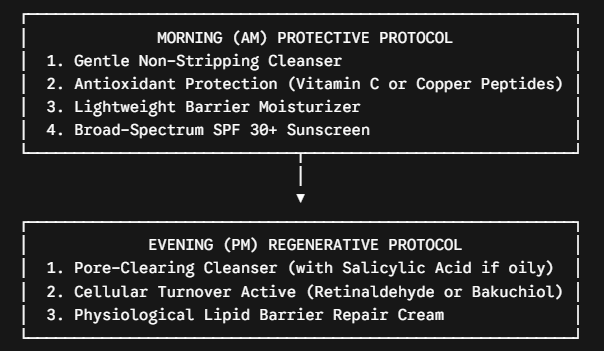
- Identify Your Primary Concern: Focus on your main skin challenge (e.g., razor burn, excess oil, fine lines, or hyperpigmentation) before selecting active ingredients.
- Introduce One Active at a Time: Never start multiple high-potency actives simultaneously. Introduce a new compound slowly (2–3 times per week) to monitor skin tolerance and guard against barrier breakdown.
- Respect Active Chemistry Compatibility: Avoid layering strong acids (like Glycolic or Salicylic Acid) directly with pure Vitamin C or Retinoids in the same application window. Space them out between morning and evening routines to prevent unnecessary irritation.
- Prioritize Barrier Health First: If your skin feels tight, red, or tender post-shave, pause all strong exfoliants and retinoids. Focus entirely on physiological lipid creams and soothing topicals like PDRN until your barrier recovers fully.
For further scientific guidance on ingredient safety and regulatory standards, consult the U.S. Food and Drug Administration (FDA) Cosmetics Guidelines.
Frequently Asked Questions (FAQ)
Q1: Why do some high-priced medical-grade products fail your comparative audits?
High prices often reflect expensive brand marketing, custom packaging, and retail markups rather than superior formulation chemistry. If a product utilizes unstable packaging, low active concentrations, or irritating synthetic fragrances, it receives a low audit score regardless of its price point or prestige.
Q2: Can I use Salicylic Acid and Retinoids on the same day?
Yes, but space them out across your routine. Use Salicylic Acid in the morning (or on non-retinoid days) to clear pore oil, and apply your retinoid in the evening. Combining them in the exact same application window increases the risk of skin barrier breakdown, especially on freshly shaved skin.
Q3: How long does GentArmor test products before publishing a head-to-head audit?
Every product or active pairing undergoes a minimum 4-to-6 week evaluation cycle. This timeframe matches the natural human epidermal cell renewal process, allowing us to accurately track active performance, hydration levels, and barrier tolerance over time.
Q4: Are botanical alternatives like Bakuchiol truly as effective as synthetic retinoids?
Bakuchiol delivers comparable anti-aging benefits over extended periods (12+ weeks) with significantly less irritation. However, synthetic retinoids like Retinaldehyde or Tretinoin produce faster collagen stimulation and cellular turnover. Choose Bakuchiol if you prioritize barrier safety, and opt for retinoids if you prefer speed and can tolerate an initial adaptation phase.
Summary and Final Recommendation
Navigating the modern grooming landscape does not require falling for marketing hype or overpaying for basic formulations. By grounding your skincare choices in men’s skincare review science, understanding active bioavailability, and respecting skin barrier biology, you can build a streamlined routine that delivers clear, visible results.
The Clinical Versus hub is continually updated with new side-by-side audits, molecular breakdowns, and comparative reviews. Explore our dedicated sub-sections to dive deeper into specific products and formulations:
- Ingredient Face-Offs: Deep biochemical comparisons between competing active molecules.
- Clinical Brands vs. OTC: Direct audits comparing medical-grade formulas against budget-friendly alternatives.
- Head-to-Head Product Audits: Side-by-side reviews of leading commercial grooming products.
Bookmark this page to stay informed with objective, evidence-backed skincare research.
Editorial & Clinical Transparency Disclosure
At Review Dermatica, our comparative audits and active ingredient analyses are built on strict bio-availability metrics and evidence-based dermatology.
Our Core Editorial & Research Team:
-
MD Newaj Hossain Asim – Founder & Primary Lead Analyst
-
Tahmina Zannat Lamya – Co-Founder & Clinical Researcher (Microbiome & Barrier Science)
Our Clinical Benchmark & Standard:
While our team conducts independent product audits and molecular evaluations, our clinical framework is deeply informed by the pioneering research of world-renowned board-certified dermatologist Dr. Leslie Baumann, M.D. (author of Cosmetic Dermatology and creator of the Baumann Skin Type System).
We align our evaluation protocols with Dr. Baumann’s published methodologies on lipid barrier repair ratios, retinoid pathways, and active stability to ensure our readers receive actionable, medical-grade guidance.
Disclaimer: Review Dermatica provides independent clinical reviews and formulation analysis for educational purposes. Always consult a board-certified dermatologist before starting new high-potency active treatments.