
Men’s Skincare AM/PM Routines: The Proven Clinical Guide (Guide 2026)
Introduction
Men’s Skincare AM/PM Routines are built on one simple biological principle: your skin has two completely different jobs depending on the time of day. In the morning, skin is in defense mode. At night, it shifts into repair mode. Trying to run the same three products at both times ignores this, and it’s the single biggest reason most men’s routines underperform.

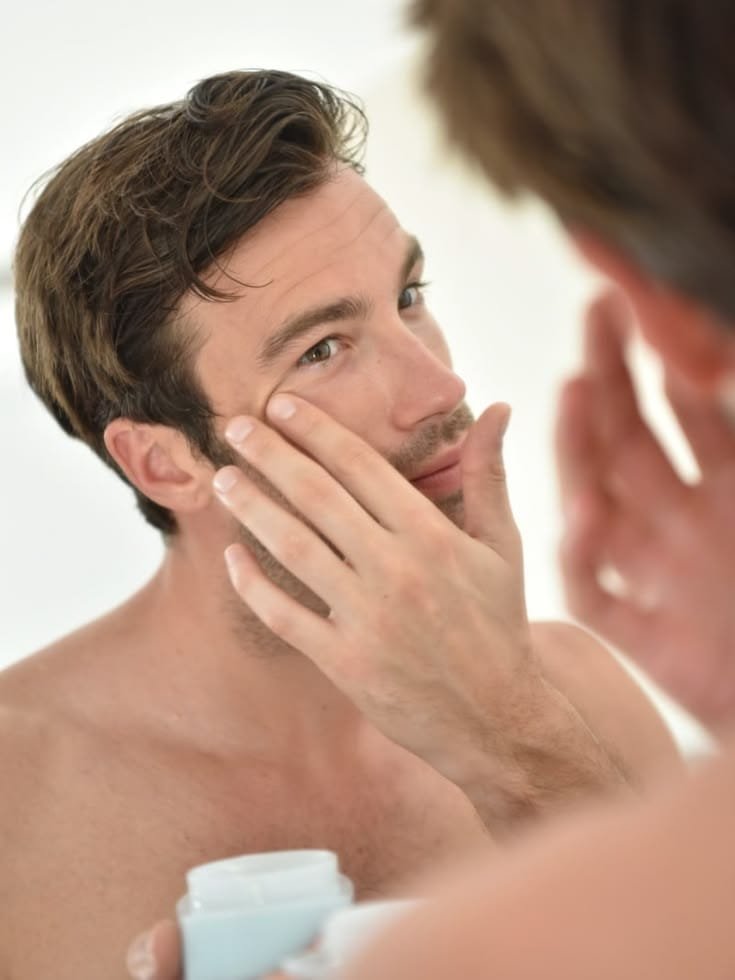
This guide breaks down Men’s AM/PM Skincare Routines into two distinct, clinically grounded protocols — a men’s daytime skincare routine focused on protection, and an evening protocol focused on barrier repair. You’ll also learn exactly why a non-greasy SPF for men matters more than almost any other product in the routine.
For the complete regimen library on the site, see our Regimen Protocols hub.
Quick Summary
- Morning routines exist to protect skin from UV, pollution, and daily damage — the priority is a non-greasy SPF for men, applied every single day.
- Evening routines exist to repair what the day damaged — the priority is barrier-supportive, ceramide-based moisturization.
- Skin loses water differently at night than during the day, which is why nighttime products are built heavier and more occlusive.
- Daily SPF use has been shown in clinical trials to measurably reverse photoaging within 12 weeks, not just prevent new damage.
- Overlapping actives (like using retinoids and heavy exfoliants both AM and PM) is one of the most common routine-building mistakes.
- Consistency across both halves of Men’s AM/PM Skincare Routines produces compounding results — skipping either half slows the other down.
Why Men’s AM/PM Skincare Routines Are Structured Differently
Skincare isn’t one routine repeated twice. Morning and evening skin biology genuinely differ, and Men’s AM/PM Skincare Routines exist because of that difference.
What Happens to Skin During the Day
During the day, skin is constantly exposed to:
- UV radiation
- Environmental pollution
- Oxidative stress from movement, sweat, and temperature shifts
This is why a men’s daytime skincare routine is built almost entirely around defense — lightweight layers that protect without interfering with the rest of the day.
What Happens to Skin at Night
At night, the priorities flip entirely. Skin devotes its resources to repair rather than defense.
- Overnight, transepidermal water loss (TEWL) patterns shift, and cell turnover activity increases as cortisol declines — conditions that favor lipid synthesis and barrier restoration. Alibaba
- Some clinical sources note that in skin with a disrupted or depleted barrier, overnight TEWL can meaningfully increase, contributing to the tightness and dryness many people notice upon waking. Boldpurity Skincare
- This is precisely why night-focused products in Men’s AM/PM Skincare Routines are formulated heavier — they’re designed to physically slow that water loss while repair processes are active.
Why the Split Matters for Men Specifically
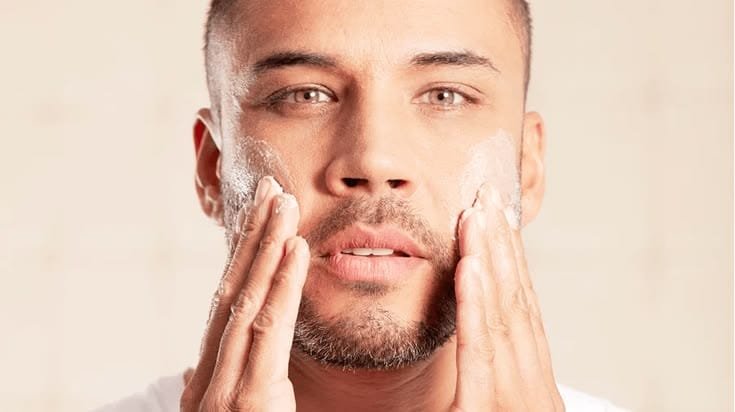
Male skin carries a thicker dermal structure and higher baseline oil production than female skin, which changes how both routines need to be built. A daytime routine that’s too heavy will feel greasy by noon. A nighttime routine that’s too light won’t deliver enough barrier support to offset the day’s damage.
For more on how specific actives behave at the ingredient level, our Molecular Breakdown section covers this in more depth.
The Men’s Daytime Skincare Routine (AM Protocol)
The men’s daytime skincare routine has one non-negotiable job: protect the skin barrier from environmental damage before it starts.
Step 1: Gentle Cleanse
A quick rinse or mild cleanser is enough in the morning — skin doesn’t need a deep clean after 7-9 hours of sleep, just removal of overnight oil buildup.
Step 2: Lightweight Hydration
A thin hydrating layer (hyaluronic acid or a light humectant serum) preps skin without adding heaviness before SPF goes on.
Step 3: Non-Greasy SPF for Men (The Most Important Step)
This is the step most men skip — and it’s the one with the strongest clinical backing in the entire routine.
- A one-year clinical trial found that daily SPF 30 use significantly improved every measured photoaging parameter starting as early as Week 12, with improvement continuing through Week 52 ResearchGate.
- The same research reported 40% to 52% improvement in skin texture and clarity by the end of the study, with 100% of subjects showing improved skin clarity and texture Academia.edu.
- Comparative testing between sunscreen strengths found that in real-world conditions, 55.3% of participants experienced more sunburn on the SPF 50+ protected side compared to only 5% on the higher-SPF side, highlighting how much daily protection level actually matters Jaad.
- Research has also flagged an adoption gap specifically among men: studies found male gender was independently associated with lower awareness and use of sunscreen. ResearchGate.
A non-greasy SPF for men (gel-based or fluid formulas, not thick creams) solves the biggest reason men skip this step: texture. If SPF feels heavy or shiny, it gets skipped — so formula choice matters as much as SPF number.
Check Today’s Price on Amazon →
Step 4 (Optional): Antioxidant Layer
A vitamin C or niacinamide layer under SPF adds environmental defense, particularly useful for men managing both oil control and daytime protection simultaneously.
The Men’s Evening Skincare Routine (PM Protocol)
The evening half of Men’s AM/PM Skincare Routines is where actual repair work happens — this is where treatment actives and barrier support belong.
Step 1: Double Cleanse (If Needed)
If SPF, sweat, or pollution built up during the day, a double cleanse — oil-based first, then a gentle foaming or gel cleanser — removes buildup without over-stripping skin.
Step 2: Treatment Actives
This is where targeted ingredients go — retinoids for cell turnover, or acne-focused actives depending on skin concerns. For guidance on layering these correctly, see our Retinoids & Cell Turnover page.
Step 3: Barrier-Repair Moisturizer
This step matters more than most men realize, and it’s backed by consistent clinical data.
- Ceramide-based moisturizers have shown significant TEWL reduction, with results found to be non-sensitizing across tested skin types Cosmoderma
- Timing also matters: research indicates applying moisturizer within 3–5 minutes of cleansing maximizes occlusion and lipid supplementation, directly supporting barrier repair Dovepress
- Ceramide formulations specifically outperform basic moisturizers over time — one comparison found that only the ceramide-containing formula significantly enhanced barrier integrity and increased stratum corneum ceramide levels, compared to a conventional glycerol-based option Dovepress
Step 4 (Optional): Occlusive Seal
For men with drier skin or in colder/drier climates, a thin occlusive layer (squalane, a light balm) over moisturizer helps lock in the repair work happening overnight.
Men’s AM/PM Skincare Routines: Side-by-Side Comparison
| Step | Morning (AM) | Evening (PM) |
|---|---|---|
| Goal | Protection | Repair |
| Cleanse | Light rinse/mild cleanser | Double cleanse if needed |
| Core Product | Non-greasy SPF for men | Ceramide barrier moisturizer |
| Texture | Lightweight, fast-absorbing | Richer, more occlusive |
| Treatment Actives | Antioxidants (optional) | Retinoids/exfoliants (as tolerated) |
| Non-Negotiable Step | SPF, every single day | Barrier moisturizer, every night |
Common Mistakes in Men’s AM/PM Skincare Routines

- Skipping SPF on cloudy or indoor days: UV exposure doesn’t stop just because the sky is overcast
- Using the same moisturizer AM and PM: Daytime formulas are too light for repair work, nighttime formulas are often too heavy under SPF
- Layering actives at the wrong time: Retinoids and strong exfoliants belong in the PM routine, not layered under SPF in the morning
- Choosing SPF by number alone: A high SPF that feels greasy gets skipped entirely — texture compliance matters more than the number on the bottle
- Applying moisturizer too late after cleansing: Waiting too long after washing reduces how well hydrating steps lock in water
Frequently Asked Questions (FAQ)
Q1: Why do men need separate AM and PM skincare routines?
Answer: Male skin experiences fundamentally different biological demands during the day versus at night. Daytime protocols must focus heavily on defensive protection against environmental aggressors, including UV radiation, airborne pollutants, and excess sebum production triggered by daily activity.
Conversely, nighttime protocols are designed for cellular recovery and structural barrier repair. During sleep, skin cell proliferation and blood flow peak, making it the optimal window to apply active treatment molecules that require overnight absorption without environmental interference.
Q2: What is the ideal order for applying daytime (AM) skincare products?
Answer: A clinically optimized morning routine follows a simple rule: layer products from lightest to heaviest viscosity. Begin with a gentle, non-stripping cleanser to remove accumulated overnight sebum and metabolic waste without compromising the lipid barrier.
Follow immediately with target treatment serums (such as Vitamin C or Niacinamide) on damp skin, followed by a lightweight gel-based moisturizer. The final and non-negotiable step is a broad-spectrum SPF to shield skin cells from collagen-degrading UV rays.
Q3: How should men structure their evening (PM) skincare routine for maximum recovery?
Answer: An effective evening routine begins with thorough cleansing to strip away accumulated daily grime, sweat, micro-pollutants, and residual sunscreen. If you wear water-resistant SPF or heavy products, consider a quick double-cleanse strategy.
Next, apply targeted cellular repair actives—such as Retinoids, Peptides, or Exosomes—to clean, dry skin. Conclude the routine with a rich, ceramide-focused barrier repair balm to seal in active ingredients and prevent Transepidermal Water Loss (TEWL) throughout the night.
Q4: Can I use retinoids in my morning skincare routine?
Answer: No, topical retinoids should strictly be reserved for your PM routine. Sunlight rapidly degrades active vitamin A derivatives (photodegradation), rendering the molecule significantly less effective before it can penetrate the dermis.
Furthermore, retinoids accelerate cell turnover, bringing fresh, delicate skin cells to the surface. This temporarily increases skin photosensitivity, making daytime application counterproductive and raising the risk of UV-induced hyperpigmentation and barrier irritation.
Q5: Should I wash my face with a cleanser twice a day?
Answer: While washing your face twice daily is the standard baseline, it depends heavily on your skin type. Men with oily, acne-prone skin benefit significantly from using a gentle active cleanser both morning and night to control microbial growth and pore congestion.
However, if you have dry, sensitive, or compromised skin, cleansing with an active face wash in the evening and rinsing with lukewarm water in the morning is often sufficient to preserve your skin’s natural Moisturizing Factors (NMF).
Q6: How long should I wait between layering different skincare products?
Answer: You do not need to wait extended periods between most basic skincare steps like toner, serum, and moisturizer; applying them onto slightly damp skin actually enhances hydration trapping. However, specific active molecules require strategic waiting times.
When using pH-dependent actives—such as L-Ascorbic Acid (Vitamin C), Salicylic Acid (BHA), or Prescription Retinoids—allow 1 to 2 minutes for the product to absorb fully before applying the next layer to prevent formula pilling or active ingredient neutralization.
Q7: How does daily shaving fit into an AM/PM skincare routine?
Answer: Shaving should ideally be integrated into your morning or evening routine immediately after cleansing, when facial hair is softened by warm water. Always use a proper barrier-protecting shave cream rather than harsh drying foams.
Post-shave care requires immediate barrier recovery. Avoid alcohol-based aftershaves, and instead apply a soothing serum containing Niacinamide, Panthenol, or Centella Asiatica before applying your standard AM moisturizer or PM repair cream.
Q8: How long does it take for a new AM/PM skincare routine to show visible results?
Answer: Immediate superficial hydration and reduced oiliness can be noticed within 1 to 3 days of starting a consistent regimen. However, true structural skin improvements align with the natural epidermal cell turnover cycle, which takes roughly 28 to 40 days in adult men.
For deeper concerns—such as collagen rebuilding, fine line reduction, and significant acne clearing—clinical trials show peak results between 8 to 12 weeks of strict AM/PM routine adherence.
Final Summary
Men’s Skincare AM/PM Routines work because they respect what skin actually needs at each time of day — protection in the morning, repair at night. A non-greasy SPF for men is the cornerstone of the men’s daytime skincare routine, while a ceramide-rich barrier moisturizer anchors the evening protocol. Run both consistently, and the two halves compound into results neither routine could deliver alone.
For more evidence-based skincare research and reviews, visit Review Dermatica.
Sources referenced: Journal of the American Academy of Dermatology (JAAD), PubMed, NCBI/PMC clinical trials, Dove Medical Press (International Journal of General Medicine).