
UV Defense & Actives Index: 5 Critical UV Filters | Gent Armor
Solar radiation represents the single most aggressive external stressor responsible for premature cutaneous aging, barrier degradation, and DNA damage. While basic cosmetic sunscreens have long relied on rudimentary active concentrations, modern dermatological science demands a far more sophisticated framework. Welcome to the UV Defense & Actives Index, an expert-level reference protocol curated by Gent Armor to evaluate modern photoprotective formulations through a strictly analytical lens.
Navigating the complex landscape of sun protection requires understanding how specific molecular structures absorb, reflect, and dissipate light energy. The primary objective of our UV Defense & Actives Index is to bridge the gap between clinical research and daily application. Through rigorous evaluation of Sunscreen Active Ingredients, our team at Gent Armor analyzes how modern formulations interact with male skin physiology, facial hair patterns, and sebum production.
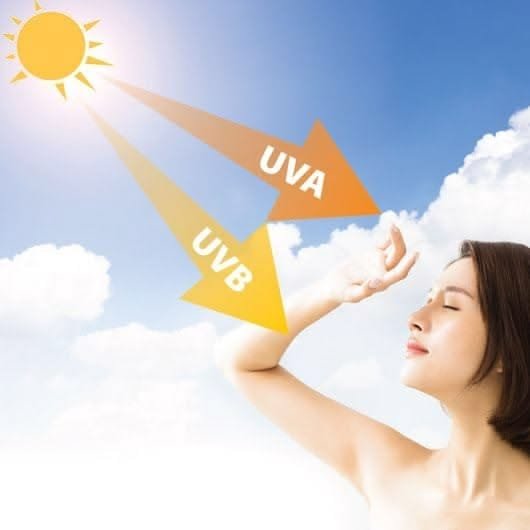
When building a comprehensive UV Defense & Actives Index, scientists must account for two distinct zones of the solar spectrum: Ultraviolet A (UVA) rays, which penetrate deep into the dermal matrix to destroy collagen and elastin, and Ultraviolet B (UVB) rays, which cause superficial erythema and cellular mutation. Achieving true Broad Spectrum UV Defense requires a multi-layered matrix of active molecules that operate in harmony without breaking down under sustained light exposure.
1. Deconstructing Clinical UV Filters: Mechanism and Bioavailability
To understand why traditional sunscreens often fail under harsh real-world conditions, one must first examine the chemical architecture of modern Clinical UV Filters. Unlike legacy sun care products that relied heavily on unstable organic compounds, modern photoprotective science leverages advanced molecular structures designed for maximum biocompatibility and stability.
In this section of the UV Defense & Actives Index, we analyze the functional mechanisms of chemical versus physical filters. Chemical filters operate by absorbing high-energy ultraviolet photons and converting that energy into harmless thermal energy. However, older chemical filters often degraded rapidly during this heat dissipation process. Modern Clinical UV Filters overcome this limitation through resonance stabilization, enabling the molecule to repeatedly undergo photoprotective cycles without degradation.
| Filter Name | Target Wavelength Coverage | Key Clinical Benefit |
| Tinosorb S (BEMT) | 290–370 nm (UVA I, UVA II, UVB) | High photostability & synergy |
| Tinosorb M (MBBT) | 280–400 nm (Broad Spectrum Hybrid) | Hybrid absorption & scattering |
| Uvinul A Plus (DHHB) | 320–400 nm (Deep UVA I) | Excellent free radical mitigation |
| Non-Nano Zinc Oxide | 290–400 nm (Full Spectrum) | Inert, non-irritating physical barrier |
| Mexoryl SX (Ecamsule) | 290–390 nm (Peak UVA II) | Water-soluble, lightweight texture |
The efficacy of Clinical UV Filters relies heavily on skin surface distribution. When applied to the stratum corneum, these active agents must form a uniform, flexible film that resists disruption from perspiration, sebum, and environmental abrasion. Within the UV Defense & Actives Index, Gent Armor evaluates how these active molecules pair with structural polymers to ensure long-lasting coverage. For a deeper understanding of cellular recovery and how active molecules repair degraded tissue, explore our detailed analysis on PDRN and Skin Barrier Restoration.
Furthermore, incorporating high-grade Sunscreen Active Ingredients into a daily routine does more than prevent sunburn; it preserves structural dermal density. When photolytic breakdown is suppressed, dermal fibroblasts retain their capacity to produce structural proteins. Therefore, every entry in our UV Defense & Actives Index prioritizes compounds that offer robust cellular defense while maintaining low irritation profiles.
2. Photostable UV Protection: Avoiding Free Radical Cascade
A critical limitation of legacy sunscreens is photodegradation—the phenomenon where a filter breaks down upon exposure to sunlight, generating free radicals and leaving the skin vulnerable. Achieving true Photostable UV Protection is therefore the primary benchmark for any high-performance formulation evaluated in the UV Defense & Actives Index.
When an active molecule absorbs light without proper photostability mechanisms, its molecular bonds cleave. This breaking of bonds generates reactive oxygen species (ROS) that induce oxidative stress within dermal tissue. Modern Sunscreen Active Ingredients circumvent this issue through intramolecular hydrogen transfer and rapid energy dissipation pathways.
At Gent Armor, our scientific audit within the UV Defense & Actives Index focuses on stabilizing combinations. For instance, pairing delicate UVA absorbers with photostable triazine derivatives ensures that the overall formulation maintains its photoprotective capability over prolonged exposure.
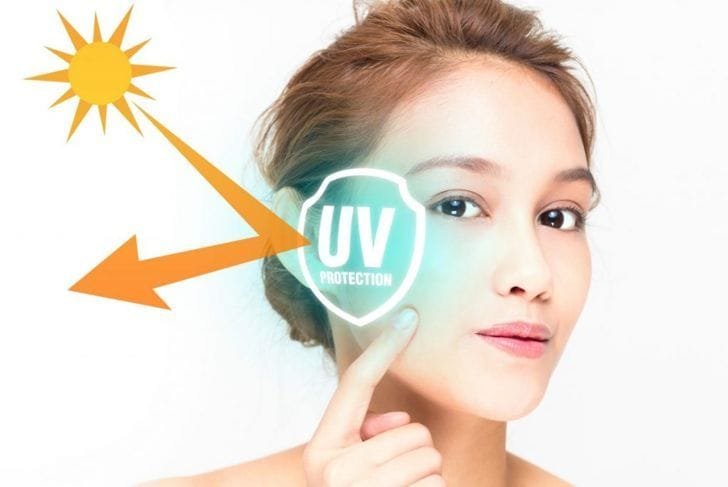
- Energy Dissipative Pathways: Highly stable molecules release absorbed energy as non-damaging infrared heat within picoseconds.
- Synergistic Stabilization: Photostable compounds donate energy to secondary filters, resetting their absorption capacities.
- Oxidative Shielding: Antioxidant networks integrated into Photostable UV Protection protocols neutralize residual singlet oxygen molecules before lipid peroxidation can begin.
Without robust Photostable UV Protection, applying sun care products can inadvertently expose the skin to secondary free radical cascades. The UV Defense & Actives Index continuously tracks published clinical literature to verify that recommended formulations maintain at least 90% of their protective capacity after two hours of direct sunlight. To see how clinical antioxidants support cellular resilience alongside sun protection, read our comprehensive review on Vitamin C and Ferulic Acid Synergies.
3. The 5 Critical UV Filters in Our Index
Within our comprehensive UV Defense & Actives Index, five specific compounds represent the apex of modern dermatological sun protection. These Clinical UV Filters have been thoroughly vetted by Gent Armor for their superior absorption spectra, photostability, and low cutaneous reactivity.
1. Tinosorb S (Bis-Ethylhexyloxyphenol Methoxyphenyl Triazine)
Tinosorb S is an exceptional oil-soluble broad-spectrum filter capable of absorbing UVA and UVB radiation simultaneously. Highlighted in our UV Defense & Actives Index for its stability, it does not degrade even under high solar intensity. Moreover, Tinosorb S actively stabilizes other weaker Sunscreen Active Ingredients, making it a foundational element in high-performance formulas.
2. Tinosorb M (Methylene Bis-Benzotriazolyl Tetramethylbutylphenol)
Operating as a hybrid organic-microfine physical filter, Tinosorb M provides comprehensive Broad Spectrum UV Defense by absorbing and scattering light rays. Its unique microfine particle structure creates a durable protective layer on the skin without leaving a chalky white residue, making it ideal for the daily grooming routines evaluated by Gent Armor.
3. Uvinul A Plus (Diethylamino Hydroxybenzoyl Hexyl Benzoate)
Targeting the long-wave UVA spectral region (UVA I), Uvinul A Plus prevents serious structural damage to the dermal matrix. Featured within the UV Defense & Actives Index as a premier anti-aging shield, it offers excellent Photostable UV Protection and remains highly stable over extended periods, neutralizing free radicals that target collagen synthesis.
4. Non-Nano Zinc Oxide
As the definitive inorganic physical shield, non-nano zinc oxide reflects and scatters ultraviolet light across the entire spectrum. Recognized in the UV Defense & Actives Index for its soothing properties, zinc oxide is ideal for compromised skin barriers, post-procedure recovery, and reactive male skin types.
5. Mexoryl SX (Ecamsule)
Mexoryl SX is a water-soluble filter specifically targeted against short-wave UVA II radiation. Within our UV Defense & Actives Index at Gent Armor, this active agent is lauded for its lightweight finish and smooth integration into daily hydrating lotions without increasing greasiness.
4. Engineering Broad Spectrum UV Defense for Male Physiology
Male skin possesses distinct biological characteristics—including higher dermal thickness, increased sebum production, and greater pore density—that demand targeted photoprotective engineering. In this section of the UV Defense & Actives Index, Gent Armor analyzes how Broad Spectrum UV Defense must adapt to these specific physiological factors.
Higher androgen levels lead to elevated cutaneous lipid production. Consequently, traditional sunscreens often trap sebum, clog pores, and cause inflammatory breakouts. To overcome this, modern Sunscreen Active Ingredients are formulated within lightweight, non-comedogenic emulsion systems that bond effectively to hair follicles and coarse facial skin without slipping.
A well-engineered Broad Spectrum UV Defense system must balance oil control with deep hydration. When exposed to persistent UV stress, the skin’s natural moisture barrier degrades through transepidermal water loss (TEWL). By pairing advanced Clinical UV Filters with lipid-replenishing agents, formulations tracked within our UV Defense & Actives Index help maintain long-term skin health.
- Sebum Resistance: Advanced active matrices prevent film disruption caused by natural facial oils.
- Follicular Penetration Avoidance: Microfine physical and organic filters stay on the skin’s surface without clogging facial hair follicles.
- Hydration Balance: Integrated humectants offset the drying effects of prolonged sun exposure while preserving Photostable UV Protection.
5. Integrating Sun Care into Advanced Clinical Regimens
Sun protection should not exist in isolation; it must function as the primary protective layer over a comprehensive skincare regimen. Within the UV Defense & Actives Index, Gent Armor examines how Clinical UV Filters interact with other active ingredients, including retinoids, exfoliating acids, and synthetic growth factors.
When utilizing potent actives that accelerate cell turnover, the skin’s outermost protective layer temporarily thins, making it significantly more sensitive to light-induced damage. Applying robust Broad Spectrum UV Defense daily is essential to prevent hyperpigmentation and erythema during intensive skin-renewing therapies.
Recommended Protocol Sequence:
- Morning Protocol: Gentle Cleanser $\rightarrow$ Antioxidant Serum $\rightarrow$ Barrier Repair Cream $\rightarrow$ Broad Spectrum UV Defense
- Night Protocol: Oil/Micellar Cleanser $\rightarrow$ Hydrating Cleanser $\rightarrow$ Active Treatment (Retinoid/Acid) $\rightarrow$ Dermal Restorative Cream
When integrating daily sun care into a clinical routine, consider these core recommendations from the UV Defense & Actives Index:
- Antioxidant Layering: Apply L-ascorbic acid or ferulic acid underneath your photoprotective product to neutralize free radicals that bypass physical shields.
- Proper Cleansing: Use a dual-phase cleansing routine at night to completely remove lipid-soluble Sunscreen Active Ingredients without stripping the skin’s barrier.
- Consistent Reapplication: Ensure continuous Photostable UV Protection by reapplying every two hours during prolonged outdoor activity.
Understanding these structural interactions is central to the philosophy at Gent Armor. By selecting tested formulas cataloged in our UV Defense & Actives Index, men can maintain skin health, prevent photoaging, and ensure optimal long-term dermal resilience.
Final Analytical Verdict: The Gent Armor Protocol
The modern standard for sun protection extends far beyond basic SPF ratings. As demonstrated throughout the UV Defense & Actives Index, achieving true skin preservation requires a complete understanding of Clinical UV Filters, photostability dynamics, and multi-spectrum coverage.
By selecting products enriched with high-grade Sunscreen Active Ingredients that maintain proven Photostable UV Protection, you safeguard your skin against deep structural degradation, loss of elasticity, and environmental damage. Explore the full suite of clinical guides, protocol breakdowns, and ingredient audits on Gent Armor to build a high-performance routine backed by dermatological science.