
Head-to-Head Audits: 7 Brutally Honest Comparisons
Walk into any drugstore aisle, and you’ll find two, sometimes three, nearly identical tubes standing next to each other, each one claiming to be the “dermatologist’s pick.” One says clinical. One says natural. One says both. None of them tell you which one actually belongs on your bathroom shelf.
That’s the gap this section exists to close. Head-to-Head Product Audits is where Gent Armor runs a direct, structured men’s skincare product comparison — pulling two competing products, brands, or formulas into the same frame and breaking down exactly where one earns its price tag and where the other is just better marketing. No brand loyalty, no affiliate bias baked into the verdict, no “both are great, just pick whichever” cop-out—a winner, a reason, and the data behind it.
If you’ve read through GentArmor Lab or Regimen Protocols, you already know our approach: skin biology first, product hype second. This section is where that philosophy gets applied at the product level — one formula against another, under the same criteria, every time.

Why Men Need Their Own Skincare Product Comparisons
Most comparison content on the internet — the “X vs Y” articles that dominate search results — is written for a generic audience, which in practice usually means it’s written with female skin biology as the unspoken default. That’s not a minor detail. Male and female skin are measurably different organs, and treating them the same in a comparison review produces recommendations that don’t hold up in practice.
The physiological differences are well documented. A literature review covering dozens of studies on sex-based skin differences found that hydration, transepidermal water loss, sebum, microcirculation, pigmentation, and thickness all differ significantly between men and women, which means the two groups often need genuinely different formulations rather than the same product in a different box. Dermatology Times
Three differences matter most when we run a men’s skincare product comparison:
Oil production. Multiple dermatology sources place male sebum output at roughly double that of female skin on average, driven by testosterone’s effect on the sebaceous glands, with some estimates going as high as three to four times higher depending on the skin zone measured. This is why a moisturizer that reads as “perfectly balanced” in a general beauty review can feel heavy, pore-clogging, or borderline greasy on male skin within a few hours.
Skin thickness. Androgen stimulation increases dermal collagen density, and most dermatology sources place male skin at approximately 20 to 25 percent thicker than female skin, with a correspondingly tougher texture. A thicker barrier changes how actives penetrate — retinoids, acids, and vitamin C often need a different concentration or delivery system to work the same way they would on thinner skin.
Shaving. Daily or near-daily shaving is a mechanical stress most comparison reviews never account for. It disrupts the stratum corneum, increases transepidermal water loss, and changes how a product should be formulated for irritation control immediately after use — something a general-audience review has no reason to weigh.
None of this means men’s skin is simply “worse” or “harder” to treat. It means a product that wins a head-to-head on a general beauty site can lose on a site built around actual male skin physiology, and that’s exactly the gap our audits are built to catch.
Our Head-to-Head Audit Methodology
Every audit in this section follows the same fixed framework, so a comparison between two cleansers is judged on the same terms as a comparison between two sunscreens. That consistency is what makes the “head-to-head” format meaningful instead of just two separate reviews stapled together.
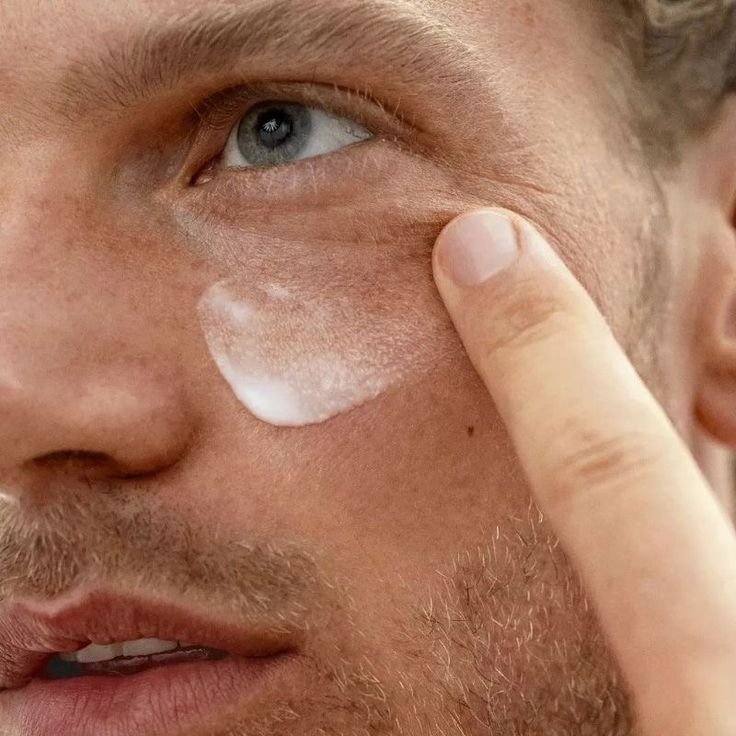
Ingredient Deep-Dive
We start by pulling the full ingredient list for both products and identifying the actives that actually drive the result — ceramides, niacinamide, hyaluronic acid, retinoids, salicylic acid, and so on — versus filler ingredients that exist mainly for texture or shelf stability. Where a formula relies on a specific delivery technology (encapsulated retinol, MVE-release systems, liposomal actives), we explain what that technology is actually doing and whether the clinical evidence backs the marketing claim.
Clinical & Research Backing
Any efficacy claim gets checked against published research where it exists — peer-reviewed journals, dermatology association guidance, or manufacturer clinical trial data where it’s been made public. If a product claims “reduces fine lines in two weeks” and we can’t find data supporting that timeline, we say so directly rather than repeating the claim as fact.
Suitability for Male Skin
Using the physiological differences outlined above, we evaluate how each product performs specifically against higher sebum output, thicker dermal structure, and shaving-related barrier stress. A product can be excellent in general and still be the wrong pick for male skin — that distinction is central to every audit.
Texture, Absorption & Wearability
Greasy residue, white cast under sunscreen, pilling under a beard, tackiness that catches on a t-shirt collar — the practical, everyday frictions that determine whether a product actually gets used consistently or ends up abandoned on a shelf after two weeks.
Price-to-Performance
We calculate cost per use, not just sticker price, since a $30 product used sparingly can be cheaper long-term than a $15 product applied twice a day liberally. The audit states plainly whether the premium option’s extra cost is justified by measurable performance gains or whether it’s paying for packaging and brand positioning.
The Verdict
Every audit ends with a clear recommendation — not a “both are good, it depends” non-answer, but a direct call on which product wins for which skin type or use case, along with the specific scenario where the other product would actually be the better pick.
What You’ll Find in This Section
Head-to-Head Audits will grow into a full library of direct product-versus-product breakdowns, organized around the seven categories men actually shop for:

1. Moisturizers and daily creams — barrier-repair formulas, oil-control options for post-shave use, and lightweight versus rich-texture comparisons for different climates and skin types.
2. Cleansers — foaming versus cream versus gel formulas, with particular attention to how each performs after shaving and how well they balance oil control against barrier stripping.
3. Sunscreens — mineral versus chemical filters, white-cast performance across skin tones, and sweat resistance for anyone who’s active outdoors.
4. Anti-aging and retinoid products — concentration comparisons, delivery system differences, and realistic timelines for visible results.
5. Beard and post-shave care — balms, oils, and aftershave formulas evaluated specifically for irritation control and ingrown hair prevention, an area most general skincare comparisons skip entirely.
6. Serums and targeted treatments — niacinamide, vitamin C, and peptide formulas compared for concentration, stability, and how well they layer with the rest of a routine without causing irritation.
7. Body care and deodorant/antiperspirant — often ignored in skincare comparisons entirely, but a category where formulation differences (aluminum-based vs aluminum-free, fragrance load, skin barrier impact) genuinely change day-to-day comfort.
How to Use These Audits to Build Your Routine
A head-to-head audit is most useful when it’s read as one input into a routine, not a standalone purchase decision. Before shopping from any comparison in this section, it’s worth having a baseline understanding of your own skin type and current routine gaps — that’s exactly what our Regimen Protocols section is built to establish. Once you know whether you’re solving for oil control, barrier repair, or anti-aging, the relevant audit tells you which specific product gets you there fastest, and which one is the better long-term investment versus which one is the better short-term fix.
We’d also recommend cross-checking any active ingredient mentioned in an audit against its full breakdown on GentArmor Lab, particularly if you’re layering it with other actives already in your routine — some ceramide and retinoid combinations, for example, need to be sequenced carefully to avoid irritation.
What We Don’t Do
Transparency matters more here than in most content categories, because head-to-head comparisons are exactly the format most vulnerable to bias. A few standing rules for this section:
We don’t declare a winner based on which brand pays a higher affiliate commission. Where we earn a commission on a linked product, that has zero bearing on which product wins the comparison — the losing product in an audit can still carry an affiliate link if it’s genuinely the better fit for a specific skin type mentioned in the verdict.
We don’t repeat manufacturer claims without checking them. If a brand claims a study “proves” a result and we can’t locate or verify that study, the audit says so.
We don’t manufacture a winner when the honest answer is “these are functionally equivalent.” Some comparisons will conclude that two products perform nearly identically and the deciding factor is simply price or personal preference on texture — that’s a valid, useful verdict, not a failure to pick a side.
Sources and Standards
The physiological research referenced across this section draws from peer-reviewed dermatology literature and recognized clinical bodies, including data published through PubMed-indexed studies, guidance from the American Academy of Dermatology, and formulation research from journals such as those indexed on MDPI. Individual audits will cite the specific studies relevant to that comparison directly, so you can verify any claim yourself rather than taking our word for it.
What’s Coming Next
This section will launch its first full audits shortly, starting with the comparisons readers ask about most — the drugstore staples that show up in nearly every men’s skincare routine, evaluated head-to-head under the framework above. Check back here or follow Gent Armor’s social channels for release updates, or head to Regimen Protocols now to figure out exactly what your routine is missing before the first audits go live.
Frequently Asked Questions
How does Gent Armor choose which products to compare in a Head-to-Head Audit?
At Gent Armor, our Head-to-Head Audits are designed to solve real-world buying dilemmas. We selection-test products based on strict, practical criteria to ensure every comparison delivers genuine value to buyers:
Real-World Decision Context: We focus exclusively on direct rivals—products that men frequently debate between when standing in an aisle or scrolling through e-commerce stores.
Direct Category Alignment: Products must belong to the same functional category (e.g., anti-aging serums, scalp treatments, or barrier repair creams) to ensure fair evaluation.
Price & Value Tier Matching: We pit products against competitors within similar price brackets or positioning, ensuring contextually relevant alternatives.
Marketing Claim Verification: If two products make identical marketing claims (e.g., “reduces inflammation in 7 days”), we test them side-by-side to verify which formulation actually delivers.
Formulation & Ingredient Differentiation: We prioritize comparing products with distinct active ingredients or delivery systems so users can see how different chemical profiles perform under real-world conditions.
If a comparison doesn’t directly simplify a purchasing choice or offer clear analytical value, it doesn’t make the cut.
Do you actually test the products, or is this based on ingredient lists alone?
We combine rigorous clinical analysis with hands-on testing to deliver complete, accurate evaluations. Our two-step auditing process includes:
1. Clinical & Ingredient Analysis: Before testing, every audit begins with a deep dive into the INCI (ingredient) list and backing clinical research. We analyze active concentration levels, pH balance, stability, and potential irritants to evaluate the formula’s theoretical efficiency.
2. Real-World Hands-On Testing: We then put the product through real-world trials to assess sensory and functional performance. This includes evaluating texture, absorption rate, finish (matte vs. greasy), and overall wearability throughout the day.
3. Practical Male-Specific Testing: Since men’s skincare routine requirements are unique, we specifically test products in high-stress scenarios—such as post-shave application—to evaluate sting potential, barrier soothing, and overall comfort on freshly shaved or irritated skin.
By merging science-backed formula evaluation with practical daily usage, we ensure our reviews reflect both how a product should work on paper and how it actually performs in reality.
Are the audits influenced by affiliate commissions?
No. Which product wins a comparison is decided before any affiliate link is added, and a losing product can still carry a link if it’s the better fit for a specific skin type mentioned in the verdict. Commission structure has no role in the verdict itself.
How often is a Head-to-Head Audit updated if a brand reformulates a product?
Whenever we’re notified of a reformulation or discover one during a routine ingredient check, the relevant audit is revisited and updated with the new ingredient list and, where needed, a revised verdict.
I don't see a comparison for the products I'm using — can I request one?
Yes. Reach out through our contact page or social channels with the two products you want compared, and it goes into the queue for a future Head-to-Head Audit.
Editorial & Clinical Transparency Disclosure
At Review Dermatica, our comparative audits and active ingredient analyses are built on strict bio-availability metrics and evidence-based dermatology.
Our Core Editorial & Research Team:
MD Newaj Hossain Asim – Founder & Primary Lead Analyst
Tahmina Zannat Lamya – Co-Founder & Clinical Researcher (Microbiome & Barrier Science)
Our Clinical Benchmark & Standard:
While our team conducts independent product audits and molecular evaluations, our clinical framework is deeply informed by the pioneering research of world-renowned board-certified dermatologist Dr. Leslie Baumann, M.D. (author of Cosmetic Dermatology and creator of the Baumann Skin Type System).
We align our evaluation protocols with Dr. Baumann’s published methodologies on lipid barrier repair ratios, retinoid pathways, and active stability to ensure our readers receive actionable, medical-grade guidance.
Disclaimer: Review Dermatica provides independent clinical reviews and formulation analysis for educational purposes. Always consult a board-certified dermatologist before starting new high-potency active treatments.