
Skin Cycling for Men: Dermatologist-Style 4-Night Protocol
Most guys do not quit skincare because they are lazy. They quit because they start too hard. Someone buys a retinol, a glycolic serum, and a vitamin C bottle in the same week, uses all three every night, wakes up red and flaky, and gives up by Friday.
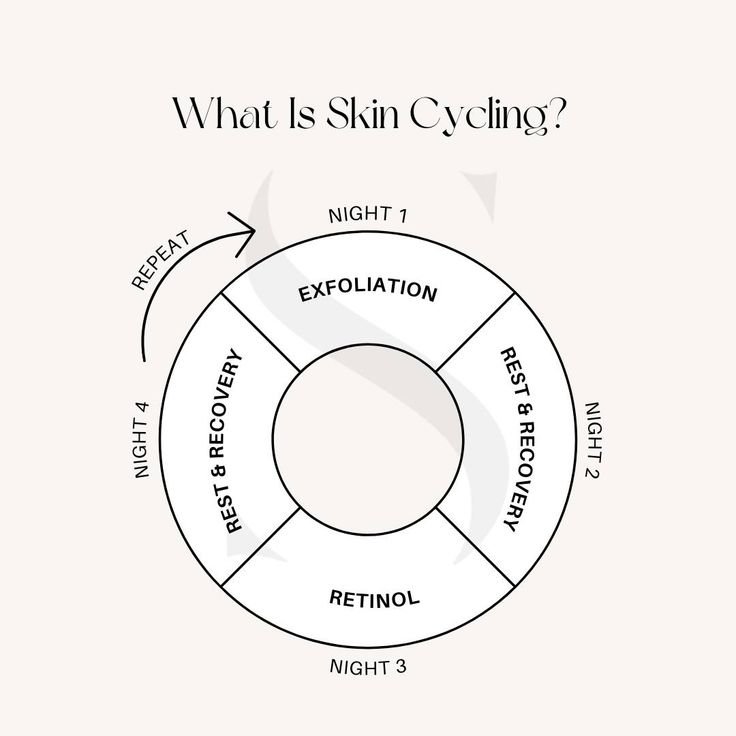
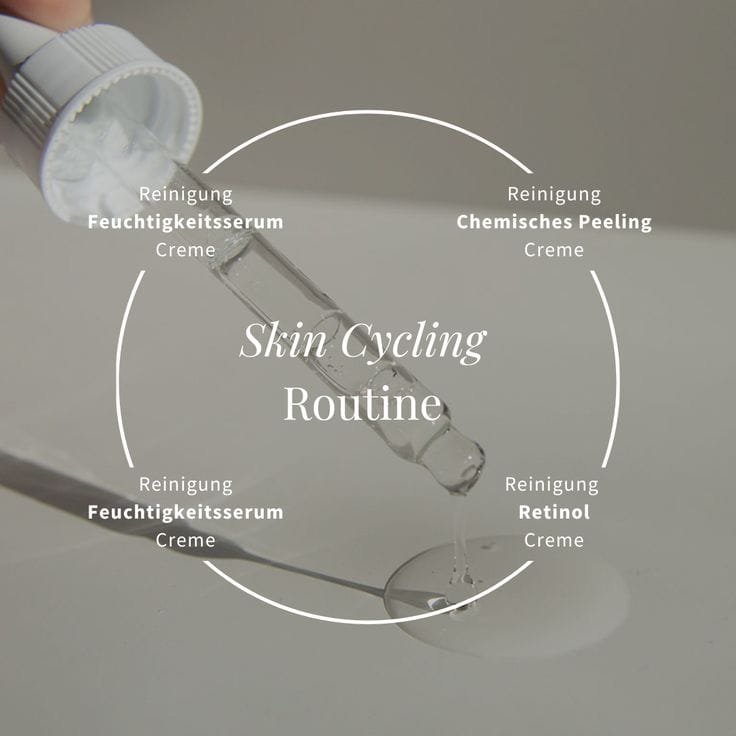
Skin cycling for men fixes that exact problem. Instead of piling actives on your face every night, you rotate them. One night for exfoliation, one night for a retinoid, and two nights where your skin does nothing except recover.
It sounds almost too simple. That is the point. If you shave, sweat, deal with oily patches or breakouts, and have zero interest in a 10-step routine, a skin cycling routine for men gives you a plan you can actually repeat.
In this guide, we explain what skin cycling is, why it suits men’s skin, what the research really says (including the gaps), and exactly how to run the routine, night by night. We also cover the skin cycling schedule for beginners, how to adjust it if you shave daily, and the mistakes that wreck most first attempts.
Quick Summary
- What it is: a 4-night rotating routine. Night 1: exfoliate, Night 2: retinoid, Nights 3 and 4: recover. Then repeat.
- Who it suits: men who want clearer, smoother skin without irritation, especially beginners and daily shavers.
- What the evidence says: the individual pieces (gradual retinoid use, barrier-supporting moisturizers, limiting exfoliation) are well supported. The exact 4-night sequence has not been tested head-to-head against other schedules.
- Best starting point: one exfoliation night, one low-strength retinoid night, and two or three recovery nights. Skip a night whenever your skin feels tight, red, or sore.
- Every morning: gentle cleanse, moisturizer if needed, and broad-spectrum SPF 30 or higher. Retinoids make daily sunscreen non-negotiable.
- Who should check with a dermatologist first: men with severe acne, eczema, psoriasis, or rosacea.
What Is Skin Cycling?
If you are asking what skin cycling is, here is the short answer. It is a nighttime routine that rotates active ingredients across a repeating cycle, with built-in recovery nights, so your skin gets the benefits of exfoliants and retinoids without being hit by both every evening.
Where the Idea Came From
The term was coined by New York dermatologist Dr. Whitney Bowe, and it spread fast on social media. The classic version puts an exfoliant on night one, a retinoid on night two, and recovery on nights three and four before the cycle starts again. curology
Dermatologists did not invent anything exotic here. They took two pieces of advice they already gave patients (“introduce retinoids slowly” and “don’t exfoliate every night”) and packaged them into one memorable pattern.
The Four Nights at a Glance
- Night 1: Exfoliation. A chemical exfoliant clears dead skin cells.
- Night 2: Retinoid. Retinol or another retinoid speeds up cell turnover.
- Night 3: Recovery. Hydrate and repair, nothing active.
- Night 4: Recovery. Same again.
Then Night 5 becomes Night 1 of the next cycle. Notice that the cycle is four nights, not seven, so it will not line up with the calendar week. We deal with that in the schedule section below.
Why Skin Cycling for Men Makes Sense
Skin cycling is not “for men” in a chemical sense. Skin is skin. But the way most men live and groom makes this approach unusually practical.
First, shaving. A razor does not only remove hair. It also scrapes away surface skin cells and leaves the barrier slightly stressed. Stack a strong exfoliant or retinoid on top of that, and irritation arrives quickly. A routine with scheduled rest nights protects the barrier you are already testing every morning. If razor burn is your main problem, our Post-Shave Barrier Repair Protocol pairs well with this plan.
Second, oil and congestion. Many men deal with oilier skin, enlarged-looking pores, and recurring breakouts along the jaw and nose. Exfoliation and retinoids are two of the most useful tools for that, but only if you can tolerate them long enough to see results.
Third, consistency. Men tend to drop complicated routines. A four-step pattern that repeats itself is easier to remember than “retinol on Mondays and Thursdays, unless I shaved, unless my face is sore.”
There is also encouraging data on tolerance. A retrospective study of topical retinoid use found that males tolerated these products better than females, with a statistically significant difference. That is a single-center review, so treat it as a hint rather than a promise, but it supports the idea that many men can handle a structured retinoid routine well, as long as it is introduced sensibly.
Does Skin Cycling Actually Work?
Here is where most blog posts get lazy, so let’s be honest about the evidence.

What Is Well Supported
Retinoid irritation depends on dose and frequency. Dermatology Times notes that spacing out retinoid applications improves tolerability without necessarily sacrificing efficacy, and that chemical exfoliants have a ceiling where irritation outpaces benefit. Skin cycling bakes both ideas into the schedule. dermatologytimes
The American Academy of Dermatology gives similar advice for beginners. Their guidance is to choose the least intense retinoid formula you can find and use it every other night at first, building up slowly. Our full breakdown of how these ingredients work lives in our Retinoids and Cell Turnover guide, and the ingredient science is covered in the Molecular Breakdown section. aad
What Is Not Proven
Be wary of anyone who says skin cycling is “clinically proven.” According to Dermatology Times, no published research has tested the specific four-night sequence as a unit against alternatives such as retinoid every other night or nightly retinoid with a weekly exfoliant. dermatologytimes
In other words, skin cycling is a smart, well-reasoned framework built from proven parts. It is not a magic protocol with its own trial results. Some dermatologists also point out that a rigid four-night rotation can leave too many nights without a retinoid for people who tolerate one well.
Our Take
We think skin cycling is best viewed as training wheels. It gives beginners a structure that prevents the most common mistake, which is doing too much too soon. Once your skin is calm and tolerant, you can tweak it, add retinoid nights, or move to a simpler weekly schedule.
If you want to know how retinoids and niacinamide compare for a men’s routine, read our niacinamide vs retinol for men breakdown.
The Skin Cycling Routine for Men, Night by Night
Before the nights, one rule: start every evening with a clean face. Use a gentle, non-stripping cleanser. If your skin feels squeaky and tight after washing, the cleanser is already too harsh. Our CeraVe Foaming Facial Cleanser review covers one popular drugstore option for oilier skin.
Night 1: Exfoliation Night
Goal: remove the dead cell buildup that makes skin look dull and clogs pores.
How to do it:
- Cleanse, pat dry, apply a chemical exfoliant to the face (avoid the eye area and any freshly shaved, raw patches).
- Leave it on for the time the product says. Rinse off if it is a wash-off formula.
- Finish with a plain moisturizer.
Which exfoliant? Choose one, not three.
- Lactic acid is a friendly starting point for dry or easily irritated skin.
- Glycolic acid works faster on rough texture, but stings more.
- Salicylic acid (BHA) suits oily, congestion-prone skin and breakouts because it works inside the pore.
- Gentler PHAs are useful if you are sensitive or new to acids.
Avoid physical scrubs with grit. They create micro-damage and are the opposite of what skin cycling is trying to achieve.
Night 2: Retinoid Night
Goal: speed up cell turnover to help with breakouts, texture, dark marks, and early signs of aging.
How to do it:
- Cleanse and let your skin dry fully. Applying a retinoid to damp skin can drive more of it in and cause more irritation.
- Use a pea-sized amount for the whole face. Keep it away from the corners of the eyes, mouth, and nose.
- Follow with moisturizer.
Which retinoid? Strength matters more than brand.
- Retinol (around 0.25 to 0.3 percent to start) is the entry point. Older research found that retinol and retinaldehyde have a lower irritation profile than retinoic acid. A clinical comparison found that retinol and retinaldehyde were far gentler than retinoic acid. nih
- Adapalene gel is an over-the-counter retinoid that is popular for acne.
- Prescription tretinoin is the strongest option. That one is a conversation for a dermatologist.
If your skin is sensitive, use the “retinoid sandwich.” Apply a layer of moisturizer, then the retinoid, then another layer of moisturizer. It lowers irritation and keeps the retinoid working. khaleejtimes
Do not exfoliate on retinoid nights. Dermatologists advise against exfoliating on nights you use retinol, because it raises the chance of irritation and sensitivity. katiecouric
Night 3 and Night 4: Recovery Nights
These nights are not wasted. They are where the barrier rebuilds, and they are what makes skin cycling for men different from just “using more actives.”
How to do it:
- Cleanse gently.
- Apply a hydrating layer such as a hyaluronic acid serum if you like.
- Seal with a simple, fragrance-free moisturizer rich in ceramides.
- Optional: a niacinamide product to support the barrier and calm oil.
No acids, no retinoid, no vitamin C. Nothing that tingles.
Looking for moisturizer ideas? Read our CeraVe Daily Moisturizing Lotion review and our Kiehl’s Facial Fuel review. If you want more on texture and ceramides, our sister site compares CeraVe vs Cetaphil moisturizer, reviews the CeraVe Moisturizing Cream, and breaks down the Torriden Dive-In serum, a popular hydrating option.
Every Morning: Cleanse, Moisturize, Protect
Skin cycling is a night routine. Mornings stay the same on all four days, and sunscreen is the part you cannot skip. Exfoliants and retinoids make skin more sensitive to the sun, and sun damage undoes everything you are trying to build.
Use a broad-spectrum SPF 30 or higher every day. If you have avoided sunscreen because it looks chalky or feels greasy, start with our guide to the best sunscreen for men and our list of no-white-cast sunscreens for men. For specific options, see our CeraVe Sunscreen SPF 30 review and EltaMD UV Clear SPF 46 review. Our sister site also compares EltaMD UV Clear vs Supergoop Unseen and explains SPF 30 vs SPF 50.
Your Skin Cycling Schedule
A skin cycling schedule works on nights, not weekdays. Here is how it looks if you start on a Monday:
Cycle 1: Mon exfoliate, Tue retinoid, Wed recover, Thu recover
Cycle 2: Fri exfoliate, Sat retinoid, Sun recover, Mon recover
Cycle 3: Tue exfoliate, Wed retinoid, Thu recover, Fri recover
Because the cycle is four nights long, the days shift each round. That is fine, and it works well for most men because it does not tie you to a fixed weekday. If you prefer a calendar pattern, a seven-day version is easy: exfoliate on one fixed night, retinoid two or three nights later, and recover on all the rest.
Weeks 1 to 2: Test the Waters
Run only the recovery routine for the first few nights, so you know your moisturizer and cleanser agree with your skin. Then add the retinoid night at the lowest strength you can find. Hold off on the exfoliant for now.
Weeks 3 to 4: Add the Exfoliant
Now run the full four-night cycle. Keep the exfoliant gentle and stick to one acid.
Week 5 Onward: Adjust to Your Skin
If your skin feels calm, you can shorten recovery to one night, or move the retinoid to two nights a cycle. If it feels tight, stingy, or red at any point, add a recovery night. Dermatologists suggest adding a third recovery night for sensitive skin. khaleejtimes
Be patient with results. Some benefit often shows up after four to six weeks, while the full effect of a retinoid can take up to six months. Taking photos in the same light every four weeks helps you see progress you will otherwise miss. carolinehirons
Skin Cycling Routine for Men by Skin Type
Oily or Acne-Prone Skin
Use salicylic acid on exfoliation night and an adapalene or retinol product on retinoid night. Keep moisturizer light and non-comedogenic. For breakouts, see our guide to men’s acne and pore control in Regimen Protocols . If you have severe or cystic acne, skip DIY routines and see a dermatologist.
Sensitive or Dry Skin
Pick lactic acid or a PHA, use the retinoid sandwich, and run three recovery nights instead of two. Choose a thicker ceramide moisturizer.
Daily Shavers
Shave in the morning, not right before your exfoliation or retinoid application at night. Do not apply an acid or retinoid over irritated, nicked, or razor-burned patches. If you shave at night, shave first, wait, and use a recovery night that day.
Darker Skin Tones
Skin cycling works well, but irritation management matters more. The AAD warns that in skin of color, irritation can trigger dark marks known as hyperpigmentation. Start slowly, use low strengths, never skip sunscreen, and add recovery nights early. aad
Men in Their 30s, 40s and Beyond
If anti-aging is your goal, the retinoid night is the star. Many older men do well with an extra retinoid night once the skin has adapted. A rich moisturizer on recovery nights helps with dryness.
Common Skin Cycling Mistakes
- Doing exfoliation and retinoid on the same night. This defeats the whole purpose of the cycle.
- Using too much product. A pea-sized amount of retinoid is enough. More does not mean faster.
- Skipping recovery nights because your skin “feels fine.” Barrier damage often shows up late.
- Using harsh scrubs. Chemical exfoliants are gentler and more even.
- Forgetting sunscreen. This is the one that cancels out progress.
- Expecting results in a week. Give it at least a month, and ideally three.
- Stacking new products during the same period. Change one thing at a time.
A Simple Skin Cycling Product Stack for Men
You do not need a bathroom shelf full of bottles. A short starter stack is enough:
- Gentle cleanser: CeraVe Foaming Facial Cleanser for oily skin.
- Moisturizer for recovery nights: CeraVe Daily Moisturizing Lotion.
- Daily sunscreen: EltaMD UV Clear Broad-Spectrum SPF 46.
- Lighter sunscreen alternative: CeraVe Sunscreen SPF 30.
For the exfoliant and the retinoid, choose strengths matched to your skin type from the sections above. If you want help narrowing them down, our Molecular Breakdown pages explain what each active does.
Skin Cycling for Men FAQ
Does skin cycling work for men?
It can, and the logic fits men well, especially those who shave. Gradual retinoid use and scheduled recovery both have solid support. Just remember the exact four-night pattern has not been tested on its own.
Can you skin cycle if you shave every day?
Yes. Shave in the morning, keep your actives for the evening, and never apply them over irritated skin. Add recovery nights if razor burn shows up.
How long does skin cycling take to show results?
Expect small changes in four to six weeks and bigger ones over three to six months, mostly driven by the retinoid.
Is skin cycling better than a regular routine?
Not necessarily. It is better for beginners and for anyone who gets irritated easily. If your skin tolerates actives well, a simpler plan may suit you fine.
Can I use vitamin C or niacinamide?
Vitamin C belongs in the morning. Niacinamide works well on recovery nights. Just introduce one new product at a time.
Final Verdict
Skin cycling for men works best as a simple, patient way to get the benefits of exfoliants and retinoids without wrecking your barrier. Exfoliate, retinoid, recover, recover. Add sunscreen every morning, and give it a month before you judge.
It is not magic, and the full four-night pattern still lacks its own head-to-head trials. But the parts underneath it are sound, and for most beginners the structure is exactly what keeps them from quitting. Start small, stay consistent, and adjust to your skin. For more routines, explore our Regimen Protocols , and for the science behind each active, visit Molecular Breakdown .