
Clinical Brands vs. OTC: 5 Honest Truths About What You’re Actually Paying For
Stand in front of a dermatology clinic’s retail shelf and then walk into a drugstore aisle twenty minutes later, and you’ll notice something strange: half the ingredient names are identical. Retinol. Niacinamide. Hyaluronic acid. Vitamin C. Same words, wildly different price tags — one bottle at $18, the near-identical-sounding one at $95. Is that gap real science, or is it a markup dressed up in clinical language?
This section exists to answer that question honestly, category by category, ingredient by ingredient. Clinical Brands vs. OTC is where we take the “medical-grade” and “dermatologist-recommended” claims that show up on premium packaging and check them against what’s actually different — concentration, regulation, delivery technology, and clinical testing — versus what’s just positioning.
If you’ve already gone through our Head-to-Head Audits section, you know our stance: no brand loyalty, no verdict decided by which product pays a better commission. This section applies that same standard to an entire pricing tier, not just one product pairing.
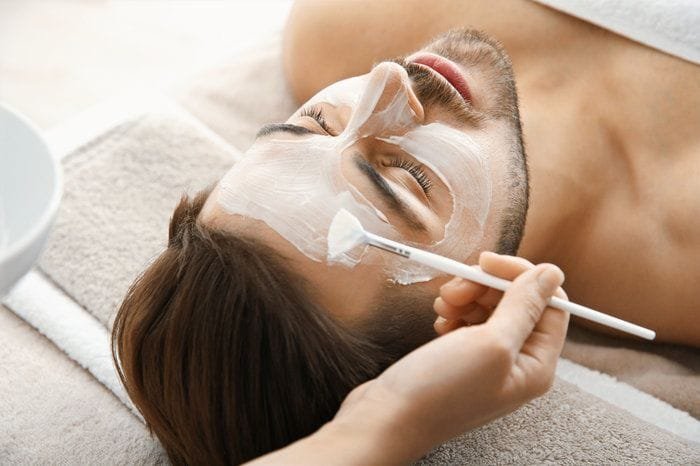
What “Clinical” and “Medical-Grade” Actually Mean
The term “medical-grade” has no single legal definition in cosmetics regulation, which is part of why it gets used loosely in marketing. But in practice, across the dermatology industry, it tends to describe products sold through or recommended by licensed providers, formulated with higher concentrations of active ingredients, and backed by dedicated clinical testing.
Standard over-the-counter skincare, by contrast, is regulated in the United States by the FDA as a cosmetic rather than a drug in most cases, which means it faces a lower bar for safety and efficacy testing before it reaches a shelf. That’s not a flaw in OTC products — it’s the reason they can be sold safely to a very broad population without professional guidance. But it also means OTC formulas are deliberately capped at concentrations low enough to be safe for nearly anyone, rather than optimized for maximum results in a supervised setting.
Five Honest Truths — What Actually Separates Clinical from OTC
Truth 1 — Concentration Is the Real Differentiator, Not Marketing
This is the single biggest factual difference, and it’s measurable. Take retinoids as an example. A well-known over-the-counter retinol cream sold on Amazon lands around 0.6 percent retinol. A clinical-grade line like SkinCeuticals offers a 1 percent retinol formulation, and ZO Skin Health offers both 0.5 percent and 1 percent tiers depending on the patient’s tolerance. The gap widens further with hydroquinone, an ingredient used for hyperpigmentation: OTC formulas are capped at 2 percent concentration by a longstanding FDA limit, while clinical formulas dispensed through a provider can go up to 4 or 5 percent.
For men specifically — with skin that’s roughly 20 to 25 percent thicker on average and a tougher dermal structure — this concentration gap matters more than it would for thinner, more reactive skin types. A 0.5 percent OTC retinol may simply not penetrate deeply enough to produce a visible result on male skin within a normal usage timeline, where a 1 percent clinical formulation will.
Truth 2 — Clinical Testing Requirements Are Genuinely Different
Medical-grade and clinical skincare lines are far more likely to have run dedicated clinical studies measuring their specific formula’s performance over time — not just general ingredient research, but trials on the actual finished product. OTC cosmetic products are not required to have that level of study behind them before going to market, and many rely on shorter-term consumer testing focused on immediate feel rather than long-term structural skin changes.
This doesn’t mean every OTC product is unproven — many rely on decades of published research on their core ingredients. But it does mean a claim like “clinically shown to reduce fine lines” carries more verifiable weight coming from a line that ran its own trial than one that’s borrowing general ingredient research and applying it loosely to its own formula.
Truth 3 — Delivery Systems Are Where the Price Often Goes
A meaningful part of what separates a $95 serum from an $18 one isn’t just the raw ingredient — it’s how that ingredient is delivered into the skin. Clinical brands frequently invest in encapsulation technology, penetration enhancers, and stabilized formulations that keep an active ingredient like vitamin C from oxidizing before it’s even applied. A vitamin C serum that degrades within weeks of opening is delivering less active ingredient by the time you use it, regardless of what the label states at the time of manufacture.
This is a legitimate cost driver, not just packaging markup — but it’s also where it becomes hardest to independently verify a brand’s claims without lab testing, which is exactly why we treat “advanced delivery system” claims with the same scrutiny we apply to efficacy claims.
Truth 4 — OTC Products Win on Accessibility and Baseline Maintenance
None of the above means OTC skincare is inferior across the board. For general hydration, basic barrier support, and daily cleansing — the maintenance layer of a routine rather than the corrective layer — well-formulated OTC products perform perfectly well, often at a fraction of the cost. A ceramide-based OTC moisturizer used consistently will outperform an expensive clinical serum used inconsistently, every time. Clinical-grade concentration only creates an advantage when a specific concern requires it, like active acne, stubborn hyperpigmentation, or established signs of aging that basic maintenance products haven’t been able to touch.
Truth 5 — Price Doesn’t Reliably Track Effectiveness Above a Certain Point
Once a product clears the “genuinely higher concentration, genuinely tested” threshold, additional price increases often reflect brand positioning, packaging, and retail markup rather than further gains in effectiveness. A $95 clinical serum isn’t automatically superior to a $60 one with a comparable concentration and comparable testing behind it — and part of the job of this section is identifying exactly where that ceiling sits for each product category, so you’re not paying a premium for a logo.
How We Audit a Clinical vs. OTC Comparison
Every comparison in this section follows a structured process so a moisturizer comparison and a retinoid comparison are judged on equivalent terms:
Ingredient concentration verification — checking published concentrations where brands disclose them, and flagging when a brand won’t disclose a specific percentage, which is itself relevant information for a buying decision.
Regulatory classification — noting whether a product is sold as a cosmetic, a cosmeceutical, or requires provider dispensing, since that classification affects what testing it was legally required to undergo.
Clinical study review — checking whether the specific product has published trial data behind it, versus relying on general ingredient research borrowed from unrelated studies.
Cost-per-use against the OTC alternative — calculating whether the price premium is proportional to the measurable difference in concentration and delivery technology.
Suitability for the concern at hand — since clinical-grade strength is only an advantage when the skin concern actually requires it; recommending an expensive corrective formula for basic maintenance is its own kind of dishonesty.
When Clinical-Grade Is Worth It for Men
Given the physiological differences we’ve covered elsewhere on this site — higher sebum production, thicker dermal structure, and daily shaving-related barrier stress — there are specific scenarios where the concentration gap between clinical and OTC products genuinely changes outcomes for men:
Active or cystic acne that hasn’t responded to OTC salicylic acid or benzoyl peroxide formulas over a reasonable trial period. Established hyperpigmentation, including post-inflammatory marks left by ingrown hairs and razor bumps, where OTC’s 2 percent hydroquinone cap may plateau results. Visible photoaging or deep static wrinkles, where a 1 percent retinol concentration produces measurably faster collagen response than a 0.3 to 0.5 percent OTC equivalent. Chronic post-shave irritation that hasn’t improved with basic barrier-repair moisturizers, which may point to a need for a targeted anti-inflammatory active at clinical strength.
Outside of these specific situations, a well-chosen OTC routine — the kind we help you build in Regimen Protocols — will handle daily maintenance just as effectively as a clinical-grade one, at a fraction of the ongoing cost.

What We Don’t Do
We don’t treat “clinical” or “medical-grade” as automatically superior — every comparison in this section checks the actual concentration and testing data before declaring a winner. We don’t recommend a $90 product when an $18 one contains a comparable concentration of the same active ingredient. We don’t accept a brand’s efficacy claim without checking whether it’s backed by a study on that specific formula, rather than borrowed research on the ingredient in general.
Frequently Asked Questions
Is clinical-grade skincare always better than drugstore skincare?
No. Clinical-grade formulations are not universally superior for every skin condition or routine step—their higher potency only offers a distinct advantage when treating targeted, complex skin concerns.
Targeted Efficacy: Clinical-grade products shine when addressing specific conditions such as active cystic acne, severe hyperpigmentation, deep fine lines, or compromised barrier function requiring medical-grade delivery systems and higher active concentrations.
Maintenance & Hydration: For foundational routine steps—like gentle cleansing, daily hydration, and baseline sun protection—a well-formulated over-the-counter (OTC) or drugstore product performs exceptionally well at a fraction of the price.
Risk of Over-treating: Using high-potency clinical products when your skin only needs basic maintenance can lead to irritation, barrier breakdown, and sensitivity. Smart skin health comes from balancing potency with barrier care, not just buying the most expensive product.
Why do clinical brands cost so much more if the ingredients are the same name?
While two products may list the exact same active ingredient (e.g., Vitamin C or Retinol) on their INCI list, clinical brands command higher prices due to fundamental differences in formulation quality and scientific backing:
Bioavailability & Delivery Systems: Clinical formulations invest heavily in advanced delivery vehicles (such as liposomal encapsulation or specialized pH buffering) that allow actives to penetrate deeper into the dermis without degrading or causing surface irritation.
Purity & Active Concentration: Clinical brands typically utilize higher purity grades of raw ingredients and higher, stabilized concentrations of active compounds rather than trace amounts used for marketing appeal.
Third-Party Clinical Testing: Premium clinical brands fund independent, placebo-controlled clinical trials to scientifically validate efficacy rather than relying solely on consumer perception studies.
Formula Stability: High-performance actives oxidize quickly. Clinical brands spend significantly more on stabilization technology and specialized airless packaging to preserve potency until the very last drop.
Can I get clinical-grade products without a prescription?
Many medical-grade lines, including SkinCeuticals and ZO Skin Health, are available without a prescription but are typically distributed through dermatology offices and licensed retailers rather than general drugstores. True prescription-strength formulas, like tretinoin, do require a provider.
Is it safe to mix clinical-grade actives with regular drugstore products?
Yes, and in fact, it is often recommended. Combining high-potency clinical targeted treatments with gentle, supportive drugstore products is one of the most effective and cost-efficient ways to build a skin routine.
Ideal Strategy (High-Low Method): Invest in clinical-grade formulations for your treatment steps (e.g., targeted serums, active retinoids, or pigment correctors) while relying on gentle, budget-friendly drugstore options for cleansers, basic moisturizers, and everyday barrier creams.
Buffer & Support: Drugstore moisturizers rich in simple ceramides, glycerin, or petrolatum serve as excellent buffers to mitigate the drying or irritating effects of strong clinical-grade actives.
Ingredient Compatibility: Safety depends on active combinations rather than price points. Avoid layering multiple strong actives (e.g., pairing a clinical Retinoid with a high-strength drugstore AHA/BHA acid simultaneously) to prevent severe barrier disruption.
How do I know if an OTC product's efficacy claim is legitimate?
Look for whether the brand cites a specific study on that formulation, not just general research on the ingredient. Our audits in this section flag exactly this distinction for every product we cover.
Editorial & Clinical Transparency Disclosure
At Gent Armor, our Clinical Brands vs. OTC audits are built on strict bioavailability metrics and evidence-based dermatology, applied specifically to male skin physiology.
Our Core Editorial & Research Team:
- Newaj Hossain Asim — Founder & Primary Lead Analyst
- Tahmina Zannat Lamya — Co-Founder & Clinical Researcher (Microbiome & Barrier Science)
Our research and editorial standards are shared with our sister publication , Review Dermatica where the same team applies this framework across a broader range of skincare formulations.
Our Clinical Benchmark & Standard:
While our team conducts independent product audits and molecular evaluations, our clinical framework is deeply informed by the pioneering research of world-renowned board-certified dermatologist Dr. Leslie Baumann, M.D. (author of Cosmetic Dermatology and creator of the Baumann Skin Type System). We align our evaluation protocols with Dr. Baumann’s published methodologies on lipid barrier repair ratios, retinoid pathways, and active stability — adjusted for the higher sebum output, thicker dermal structure, and shaving-related barrier stress specific to men’s skin — to ensure our readers receive actionable, medical-grade guidance.
Disclaimer: Gent Armor provides independent clinical reviews and formulation analysis for educational purposes. Always consult a board-certified dermatologist before starting new high-potency active treatments, including retinoids and hydroquinone.
What’s Coming Next
Upcoming audits in this section will pair specific clinical and OTC products head-to-head within the same concern category — starting with retinoid comparisons, since that’s where the concentration gap is most measurable and most relevant to men dealing with early signs of aging or post-shave texture issues. Head to Regimen Protocols to identify which concern in your own routine might actually justify a clinical-grade upgrade before the first comparison goes live.